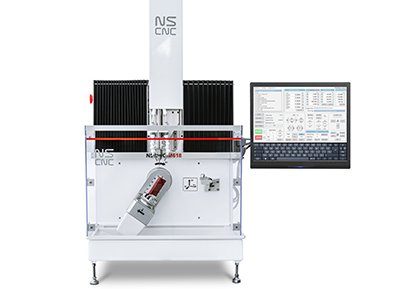
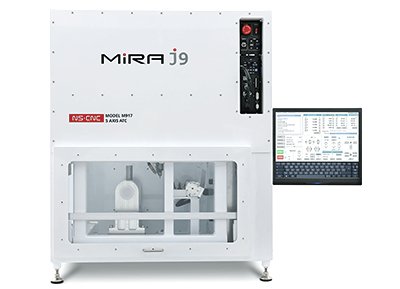
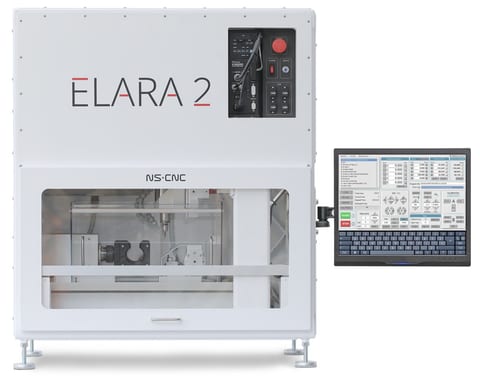
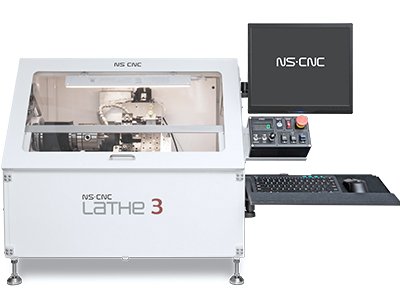
Element samples
Five reusable building blocks in the site's design language - drop any of them into a real page later. Values are illustrative. Not linked from the nav.
24×24 currentColor stroke icons. Reuse inside .icon-card tiles, spec rows, or nav.
Animated track + fill. One row may carry .bar-fill--accent to flag the leader.
Four-up headline numerals with an accent tick. Collapses to 2-up on mobile.
Donut ring driven by --pct (0–100). Stroke sweeps in when the panel reveals.
SVG plot with axes, a dashed spec line, area fill, and point markers. Line draws on reveal.
Five-axis spider plot. The data polygon springs out from center when the panel reveals.
Numbered steps on a connector that fills left-to-right; nodes light up in sequence on reveal.
- 1DesignIn-house
- 2AssembleTo spec
- 3VerifyCalibrate
- 4ShipWorldwide
Material × machine suitability. Cells tint by level and stagger-in diagonally.
Seamless looping trace on a blueprint grid - a stand-in for a live spindle-runout readout.
Infinite spec strip; content is doubled so the −50% scroll loops with no seam. Pauses for reduced-motion.
Numerals ease from zero on reveal - wired through the existing site.js .stats .num[data-target] hook.
Three-up cards with an icon tile straddling the top edge and a divided footer link. Reuses .action-card.
Icon, copy, an inline stat row, and a link - for a grid of capability or product categories.
5-axis milling
Wax, metals, and composites on one platform.
Sub-micron work
NMR microcoils, microfluidics, lab sensors.
Connected nodes with dashed connectors and one accent hub. Reuses .flow-diagram.
5-axis machining
Surrey, BC · in-house
Verified toolpathFinished part - inspected to spec, with its calibration record.
Two-column checked facts with red ticks. Reuses .fact-list / .fact-item.
Zero-backlash servo motion
Ball screws and precision linear rails on every axis, servo-monitored.
Standard 5C workholding
Collets 3–26 mm, ER adapters, a 4″ chuck - nothing proprietary.
Self-contained control
NS-Motion on a built-in mini PC; physical spindle and e-stop buttons.
Standard wall power
110/220 V single-phase, roughly 1,500 W - an ordinary outlet.
Same two-column layout, ranked with accent number badges instead of ticks.
Zero-backlash servo motion
Ball screws and precision linear rails on every axis, servo-monitored.
Standard 5C workholding
Collets 3–26 mm, ER adapters, a 4″ chuck - nothing proprietary.
Self-contained control
NS-Motion on a built-in mini PC; physical spindle and e-stop buttons.
Standard wall power
110/220 V single-phase, roughly 1,500 W - an ordinary outlet.
Each fact in its own bordered tile with a tinted tick chip - more separation, scannable in a grid.
Zero-backlash servo motion
Ball screws and precision linear rails on every axis, servo-monitored.
Standard 5C workholding
Collets 3–26 mm, ER adapters, a 4″ chuck - nothing proprietary.
Self-contained control
NS-Motion on a built-in mini PC; physical spindle and e-stop buttons.
Standard wall power
110/220 V single-phase, roughly 1,500 W - an ordinary outlet.
Two panels contrasting what ships as standard against what you never deal with.
- 5-axis simultaneous
- Calibration record
- NS-Motion control
- 5C workholding
- Built-in mini PC
- Proprietary tooling lock-in
- Three-phase power
- Laptop tether
- Annual license fees
Compact wrapping chips with a small tick - for a dense run of features. Accent fill flags the highlights.
Hairline orthographic plate with centerlines, dimension lines, a Ø callout, datum, and a feature control frame.
Stick-figure kinematic chain - linear X/Y/Z plus the A/C trunnion, with motion arrows and centerlines.
Cut cross-section of a sleeve - fine 45° section hatching, centerline, and bore / outer Ø dimensions.
Signal-flow blocks for the control chain - command path forward, encoder feedback dashed back to the controller.
Four-up: title, one line of copy, and a small monochrome UI mockup pinned to the card foot. No accent.
Import your model
Bring CAD, STL, or STEP straight into JewelryCAM.
Generate toolpaths
5-axis CAM from ModuleWorks builds the cut.
Verify the setup
Simulate stock, fixtures, and collisions first.
Cut and inspect
Run the job, then measure the part against spec.
Three bordered boxes, each a titled checklist. Flat .viz-cards--min skin with ink ticks instead of accent.
Precision
- Spindle runout ≤ 1 µm
- Sub-micron resolution
- Verified axis geometry
Control
- NS-Motion controller
- Homing and limits set
- Live runout readout
Ownership
- No annual license fees
- No tooling lock-in
- Calibration record included
One wide box with a heading and a two-column checked list - the 'what's included' panel. Collapses to one column on mobile.
Every machine ships with
No add-on tiers and no recurring fees - the list below is standard on every NS CNC machine.
- 5-axis simultaneous motion
- Calibration record
- NS-Motion control + mini PC
- 5C workholding
- Enclosed work area
- 110 / 220 V single phase
- JewelryCAM seat
- No annual license fees
Three-up cards that carry a full paragraph and a text link - the text-rich cousin of the icon-card row.
Five axes, one setup
A trunnion table tilts and rotates the part while X, Y, and Z position the tool, so undercuts and compound curves are cut in a single fixturing - no re-clamping, no lost registration.
How 5-axis worksVerified, not estimated
Every machine is measured before it ships: axis geometry, spindle runout, and positional accuracy are each checked against spec, and the numbers travel with it as a calibration record.
Inside the QA processBuilt to hold its numbers
Sub-micron resolution only matters if it stays put across a long program. Components are fitted and aligned to specification rather than corrected after assembly, so the whole machine delivers its tolerances together.
The build standardFull-sentence checked items - one with an inline link - in a single wide box. The 'what's included' panel written out in real copy.
What every machine includes
Standard on every NS CNC machine - no add-on tiers, no recurring fees.
- 5-axis simultaneous motion for the compound curves and undercuts a 3-axis mill can't reach.
- A full calibration record - axis geometry, spindle runout, and positional accuracy, measured and logged before the machine leaves Surrey.
- JewelryCAM, built on ModuleWorks toolpaths - industrial 5-axis CAM in a plugin made for jewelry workflow. Learn more
- The NS-Motion controller and a built-in mini PC, so the machine runs without a tethered laptop or three-phase power.
- An enclosed work area with dual coolant, ready for wax, metals, and composites out of the box.
- No license fees and no tooling lock-in - the machine you buy is the machine you own.
A text-forward box - overline, headline, and a couple of real paragraphs. For an argument that needs sentences, not bullets.
A CNC machine is only as precise as its least precise part.
Spindle runout under one micron, sub-micron positional resolution, and motion that stays stable across a long program - those figures set the tolerance on every machined and assembled component. A benchtop mill cutting NMR microcoils at 0.02 mm wire spacing has no allowance for drift, flex, or thermal shift in the base.
So assembly follows the design, not the other way around. Parts are fitted and aligned against specification instead of adjusted after the fact, and every machine runs the same mechanical, electronic, and motion checks before it ships - with the same tools we use in product development, which is also where the standards come from.
Read about the process