Company
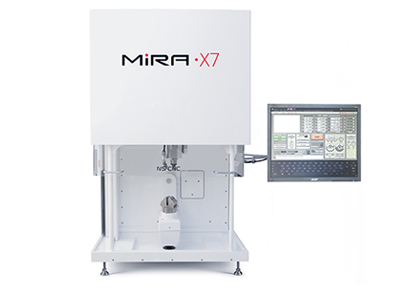
The Mira 6S is a desktop 5-axis simultaneous CNC mill designed specifically for the jewelry industry. It manufactures complex wax models and rapid prototypes from common 3D file formats - including Rhino3D, Matrix, and RhinoGold.
Three linear axes move the spindle; a Dual Rotary Table rotates the workpiece across two more - simultaneously.
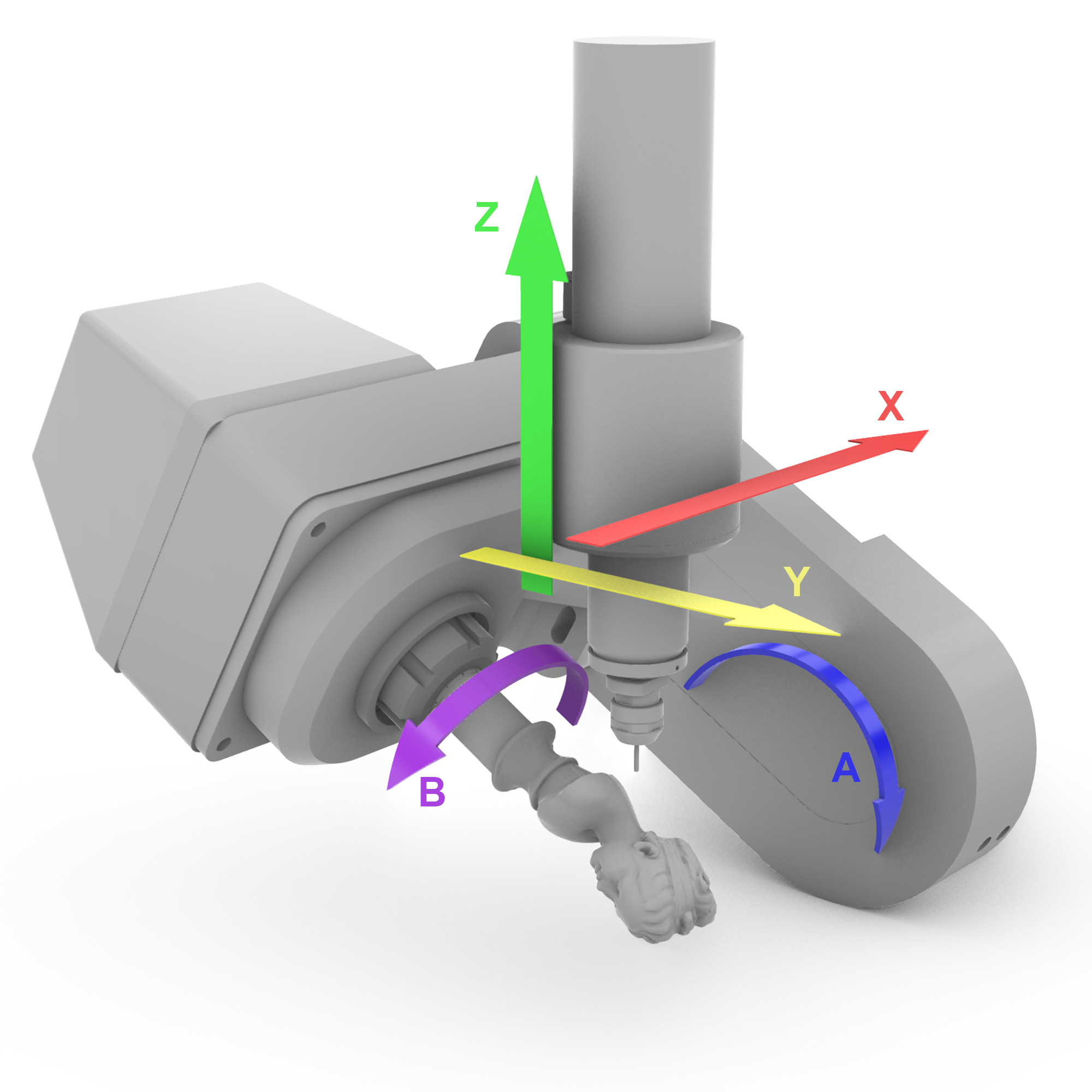
A Dual Rotary Table rotates workpieces across two axes while maintaining stability. Rotary motion is managed by a simultaneous rotary table control system - Smart Angular Movements Control.
Both rotary axes turn 360° continuously at up to 300° per second, so the cutter reaches every face of the model without repositioning.
Everything here comes off the spec sheet - the full table is further down the page.
Three linear axes (X, Y, Z) plus a Dual Rotary Table (A, B) that rotates the workpiece across two axes while maintaining stability - coordinated by Smart Angular Movements Control.
Carriage movement is driven by ball screws and servomotors for high-speed, high-force precision. When an axis reverses direction there is no measurable slack - no measurable backlash.
The smallest commanded move is 0.0003 mm. That resolution is what produces fine details and the glossy surface finishes wax models need to cast cleanly.
The NSK Nakanishi NR-2351 - ceramic bearings, a precision-ground hardened stainless steel housing, speeds up to 50,000 RPM, and milling-bit runout of 1 micron or less.
NS-Motion, the 5-axis control program, runs on a mini PC built into the machine. JewelryCAM - the CAM software that builds the milling toolpaths, no G-code or CNC-machining background needed - is included with every unit.
110 or 220 VAC single phase, roughly 1,000 W - an ordinary outlet. At 22 × 32 × 39″ and 200 lb (90 kg), it is a desktop machine in the literal sense.
A resolution of 0.3 microns (0.0003 mm) and no measurable backlash enable fine details and glossy surface finishes.
Carriage movement is driven by ball screws and servomotors for high-speed, high-force precision. When an axis reverses direction there is no measurable slack - no measurable backlash.
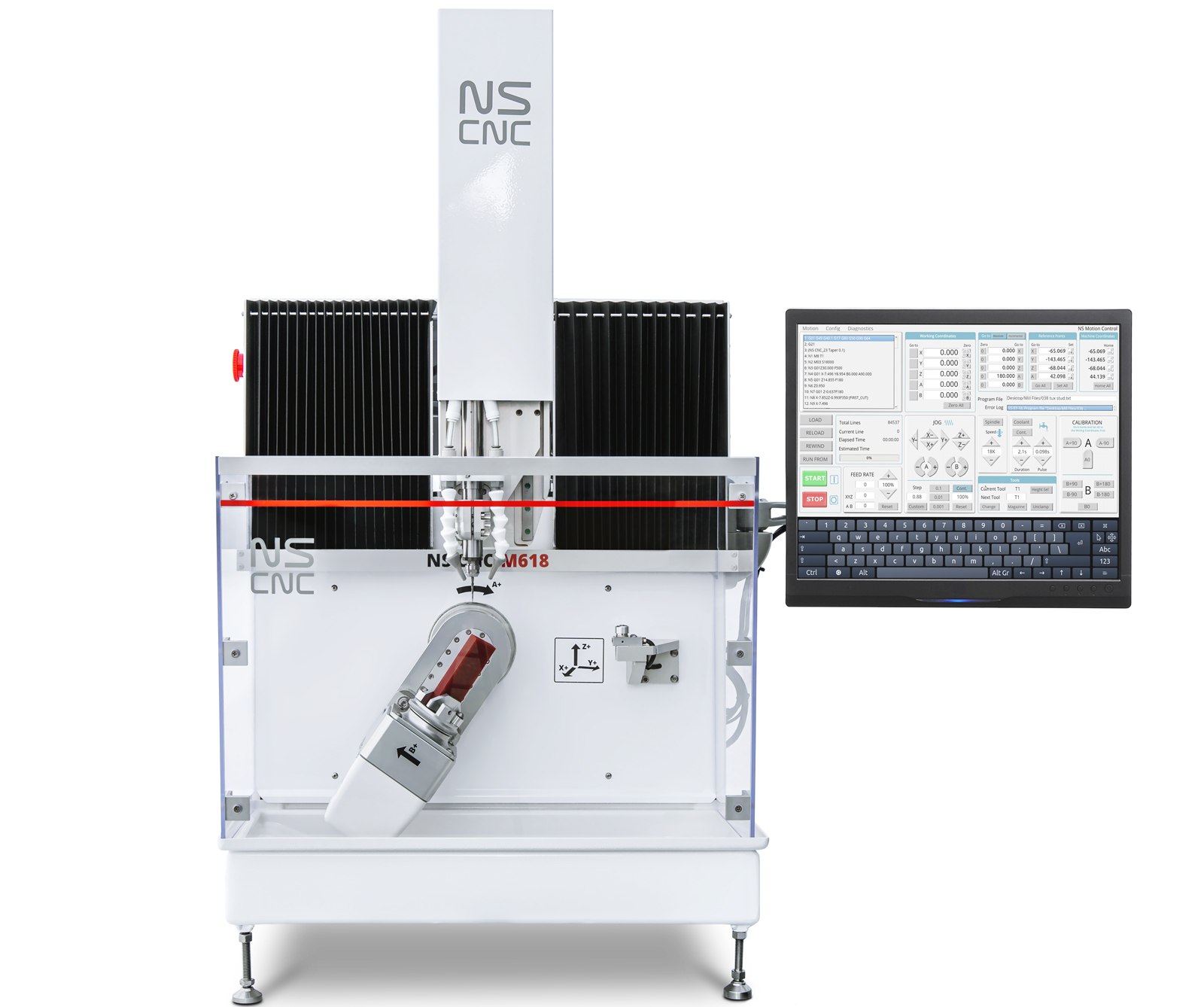
Motion, control computer, coolant, and the dual rotary table in a 22 × 32 × 39″ footprint. The numbers reference the photo.
NSK Nakanishi NR-2351 with ceramic bearings - up to 50,000 RPM, runout of 1 micron or less. Coolant nozzles flank the collet.
The A and B axes rotate the workpiece across two axes - 360° continuous, up to 300°/sec - managed by Smart Angular Movements Control. The B head is fully sealed against water and humidity.
Catches the flow and returns it to the 6-gallon (23 L) self-filtering reservoir. The fluid is NS-Cool, a water-soluble oil concentrate.
Ball screws and servomotors drive every axis - high speed, high force, no measurable backlash.
Flexible covers seal the linear rails behind them against wax chips and coolant.
The 5-axis control program runs on a mini PC built into the machine - monitor, keyboard, and JewelryCAM included. Nothing extra to buy or connect.
An NSK Nakanishi NR-2351 ceramic-bearing spindle, housed in precision-ground, hardened stainless steel.
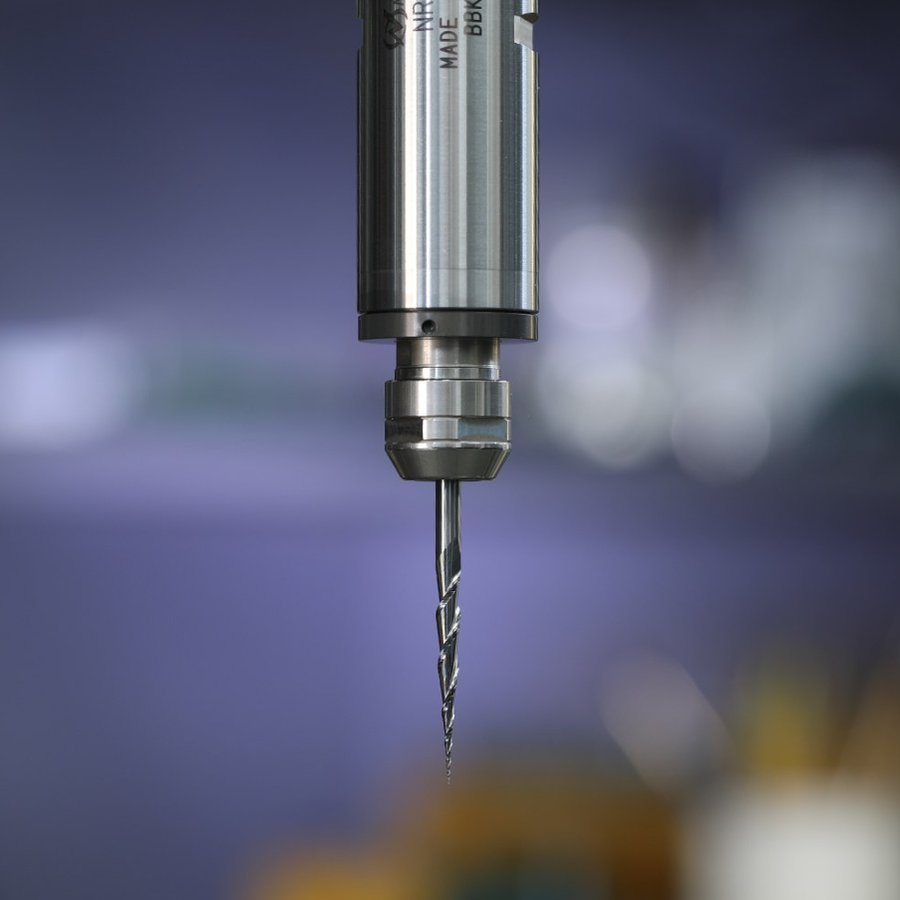
The spindle operates at speeds up to 50,000 RPM with the required air pressure - up to 30,000 RPM without - and maintains a milling bit runout of 1 micron (0.001 mm) or less.
The standard collet is 1/8″ (3.175 mm); additional collets cover 1.00 to 6.35 mm.
Undercuts, full-round detail, open lattices - geometry that requires presenting the workpiece to the cutter from any angle, milled in one setup without repositioning.
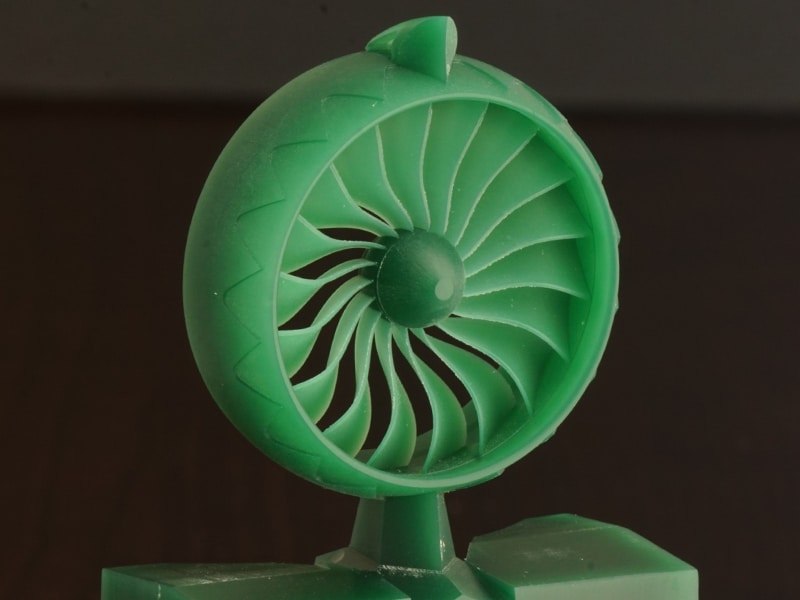
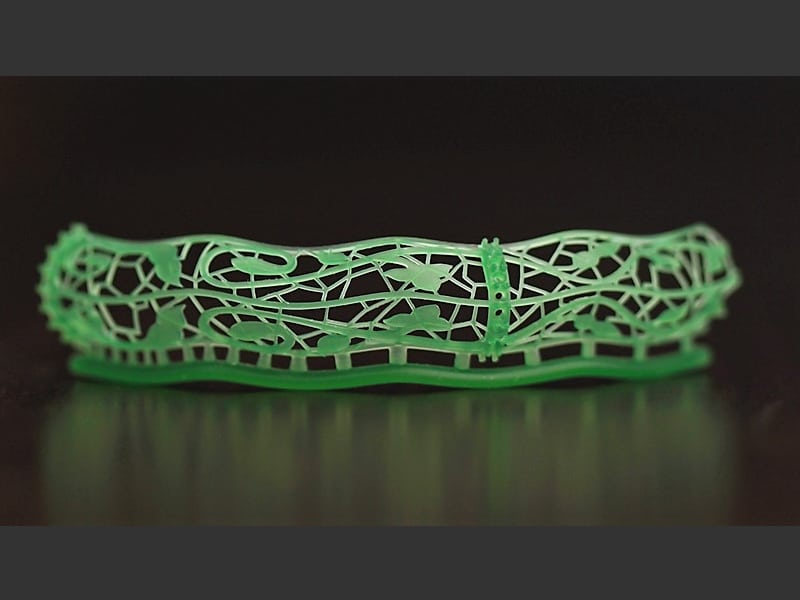
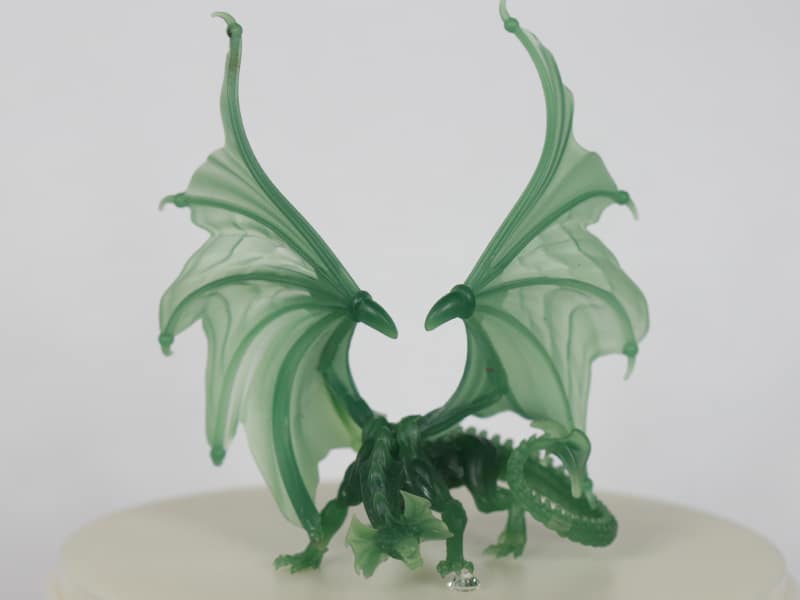
The included solid carbide Mira-Bit cuts modeling wax to a depth of 25 mm in a single pass.
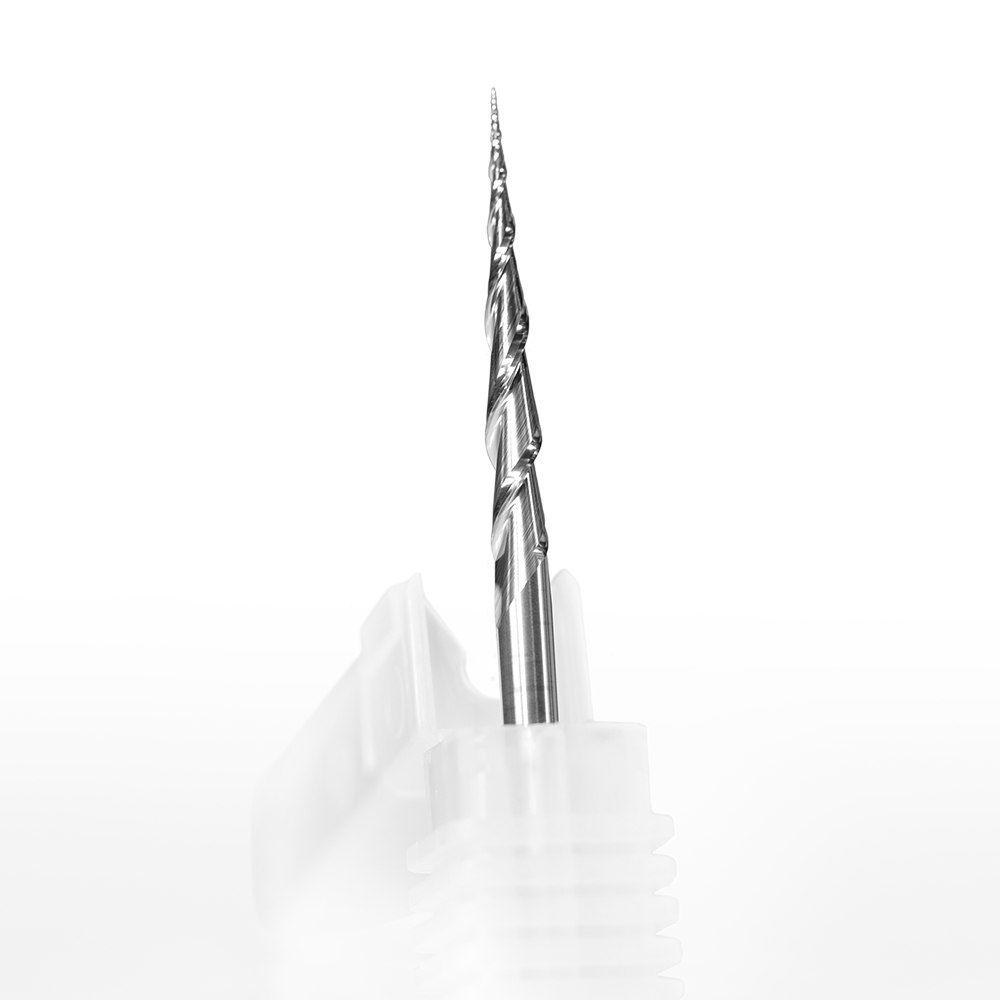
The cutter geometry takes the full 25 mm depth in a single pass - no roughing cycle before the finish cut.
Average operational lifespan: up to one year.
A liquid-cooled, self-filtering coolant system using a water-soluble oil concentrate - NS-Cool.
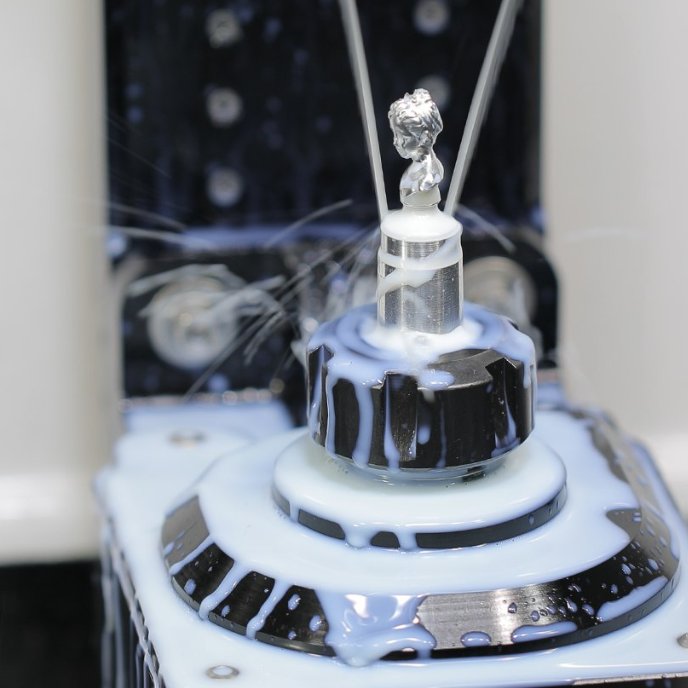
Coolant circulates continuously from a 6-gallon (23 L) reservoir and filters itself as it returns - the same fluid, cleaned and recirculated.
The B-axis rotary head is fully sealed against water and humidity penetration, so the rotary mechanism runs directly in the wet work area.
As with any CNC manufacturing process, operating the Mira 6S involves three software stages. First, a 3D model is created in a CAD program. The model is then imported into a CAM program, where it is converted into CNC machine code. Finally, the resulting code file is loaded into the machine’s control software.
Once the program is loaded, the machine is set up, the workpiece is securely clamped, and the machining process is started by pressing the Start button.
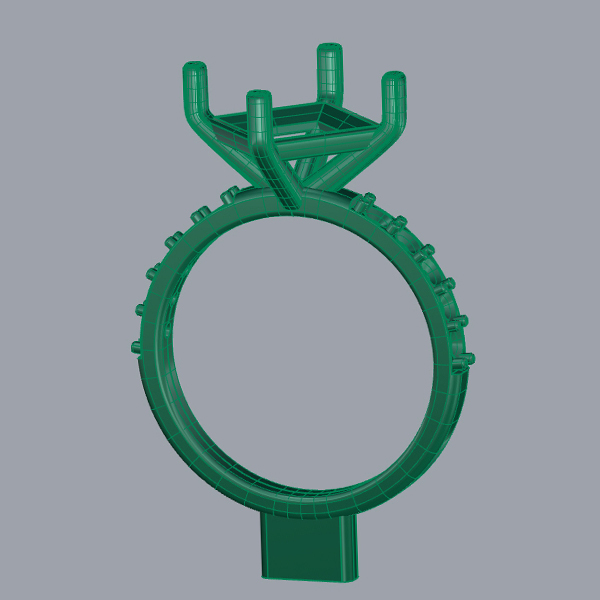
3D ring design created in the Rhino software.
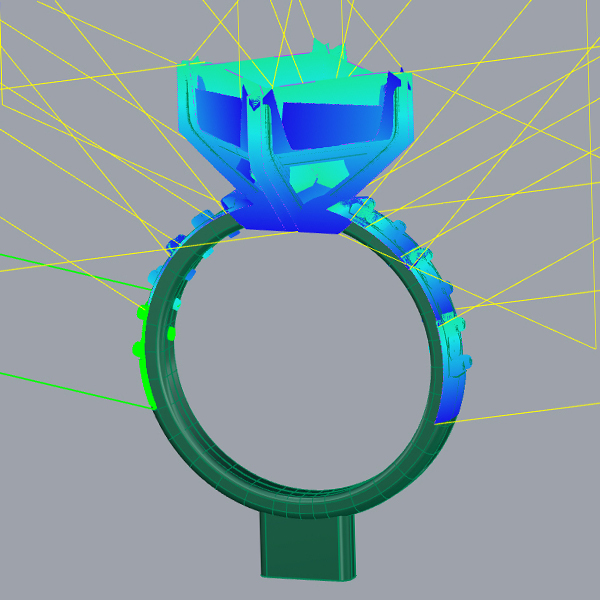
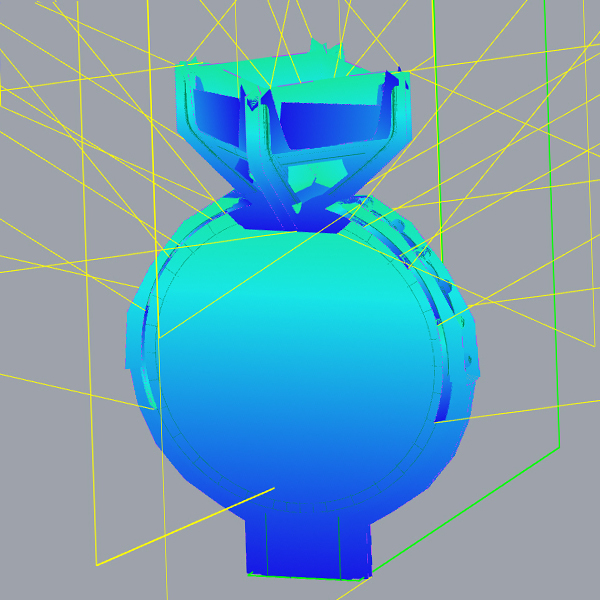
Calculating toolpaths in the JewelryCAM.
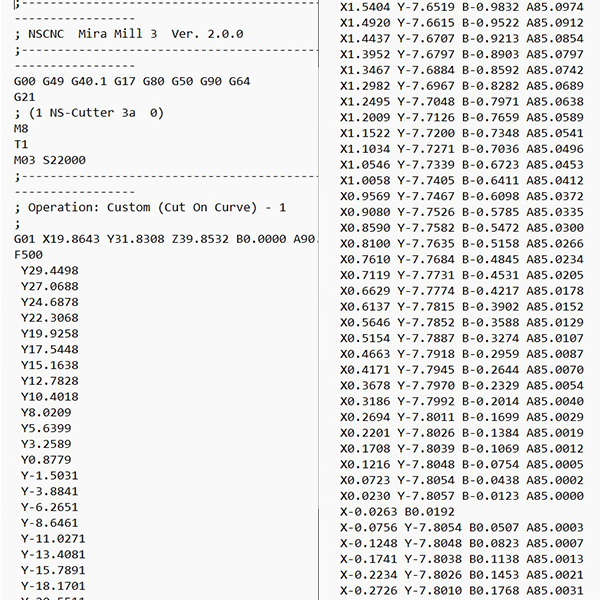
Machine codes generated in the JewelryCAM.
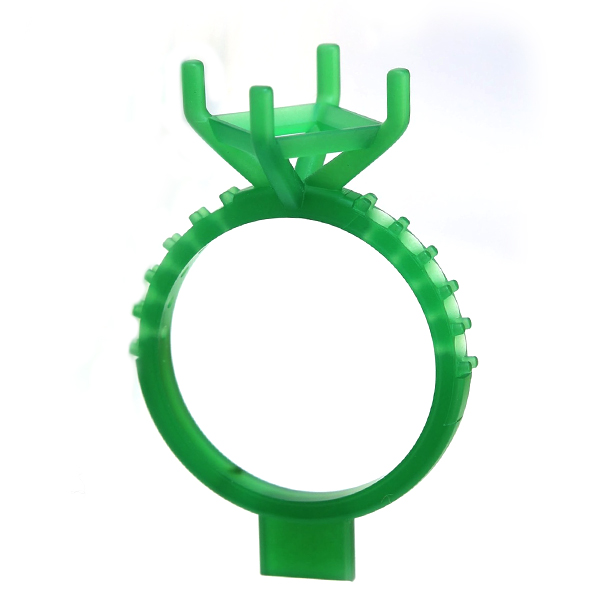
Wax model milled by machine according to codes.
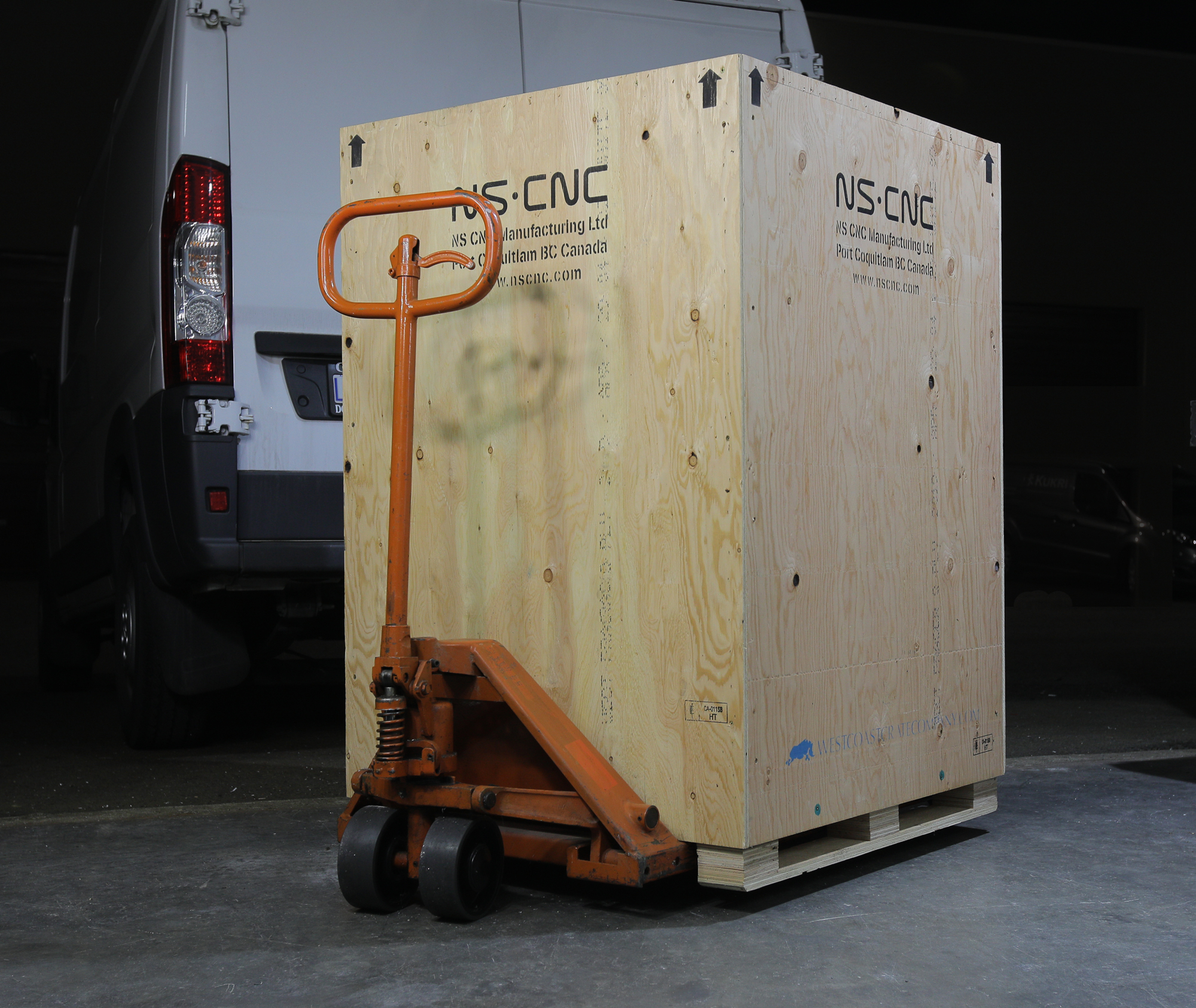
Every Mira 6S ships assembled and calibrated, with the software, tooling, and start-up supplies to begin cutting.
Wax models and rapid prototypes for jewelry - ring bands, settings, sculptural pieces - milled from modeling wax with surfaces fine enough to invest and cast without hand-finishing the wax first.
Common 3D formats, including Rhino3D, Matrix, and RhinoGold. JewelryCAM runs as a Rhino 3D plugin, so work from any Rhino-based suite moves straight to the machine.
No. JewelryCAM (JCAM), included with every machine, builds the milling toolpaths in software - no G-code and no machining background needed. You set up the job - orient the model, choose the strategy, set the stock and fixturing - and it builds the cut. NS-Motion, the control program, runs on the built-in mini PC.
The working envelope is 4.75″ (123 mm) in X, 7.50″ (190 mm) in Y, and 6.50″ (163 mm) in Z, with both rotary axes turning 360° continuously. The A turntable is 6″ (150 mm); the B turntable is 4″ (100 mm).
Only for top spindle speed. With an air supply the spindle reaches 50,000 RPM; without one it runs up to 30,000 RPM.
A liquid-cooled, self-filtering system circulates NS-Cool - a water-soluble oil concentrate - continuously from a 6-gallon (23 L) reservoir. The B-axis rotary head is fully sealed against water and humidity penetration.
The machine, assembled and calibrated; JewelryCAM 5-axis; the built-in computer with control software; milling bits; workpiece holders; milling wax; a monitor with arm; mouse and keyboard; cables; the coolant reservoir, pump, and hoses; a tools and start-up kit; and a user's guide with tutorial videos.
Standard wall power: 110 V, single-phase, with a power consumption of approximately 800 W. If your country uses 220–250 V mains power, we will supply a step-down transformer with the machine.
Machining demonstrations across NS CNC machines - including the Mira 6S milling wax on camera.
Send a design - a Rhino file, a sketch, the finished-piece dimensions. We’ll tell you whether it’s a Mira 6S job, how we’d run it, and what the machine costs.
The Mira 6S is sold direct through the shop; equipment financing is available through our financing partner.