Company
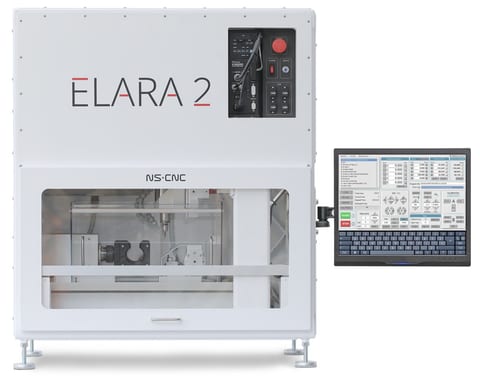
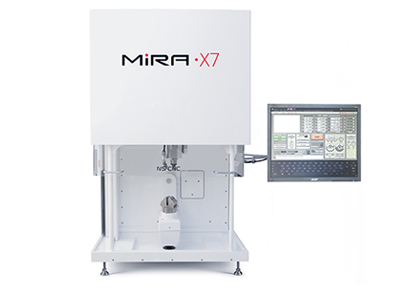
The Elara CNC machine is widely used in the watchmaking industry by both independent watchmakers and established manufacturers. It enables the precision machining of a wide range of components, including bridges, plates, cases, bracelets, and other intricate parts, from various metals.
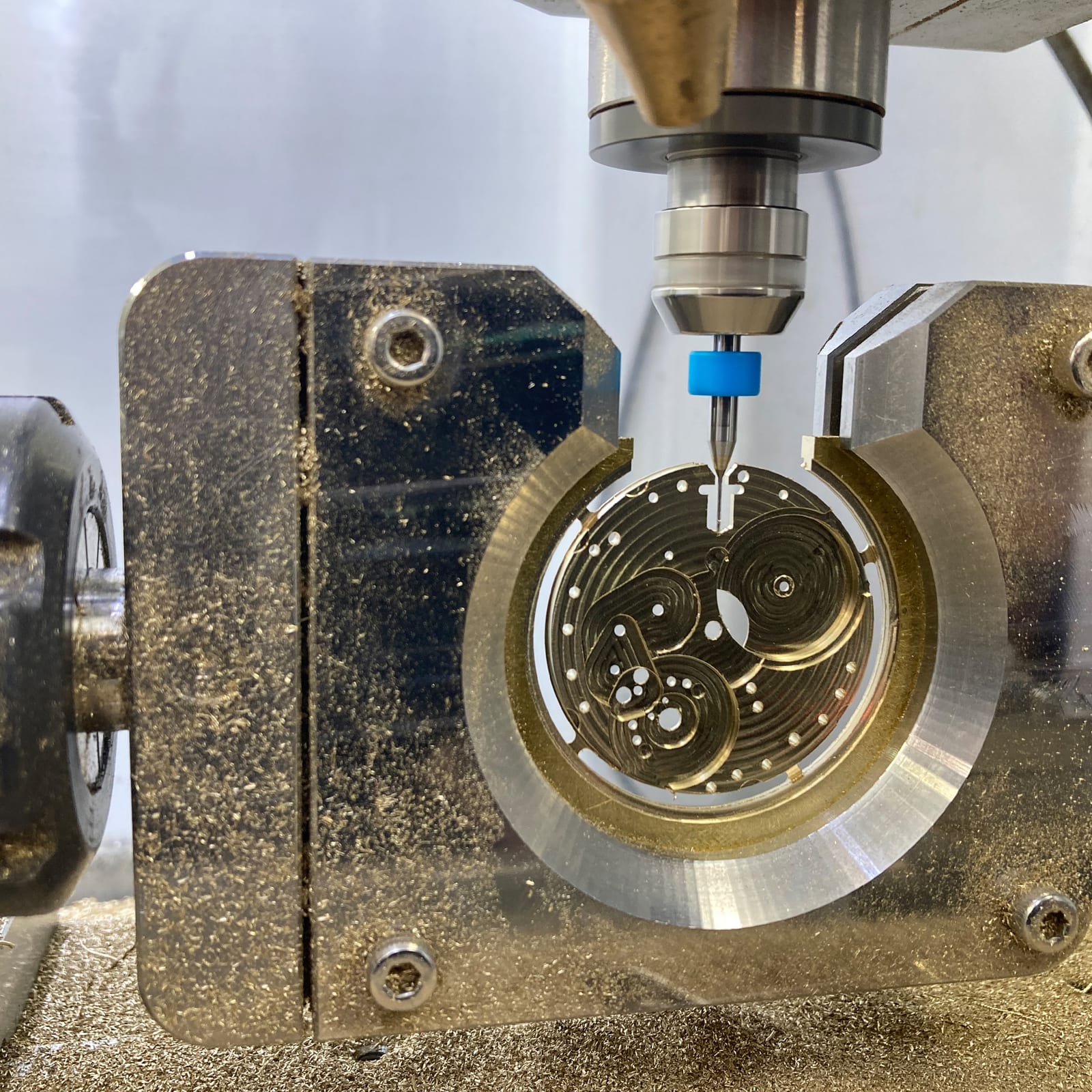
Manufacturing microscopic watch components on a CNC machine is a highly complex and time-consuming process that requires exceptional precision at every stage. Watch components such as bridges, plates, gears, and other small parts often contain extremely fine features and must be produced to very tight tolerances.
The process begins with a detailed CAD model of the component. This design is then converted into a precise machining program that determines the toolpaths, cutting sequence, speeds, feeds, and other machining parameters. Selecting the correct cutting tools is particularly important, as many watch components require extremely small-diameter cutters capable of producing delicate features without damaging the workpiece.
Preparing the machine and securing the workpiece also requires great care. At microscopic scales, even a very small amount of movement or misalignment can affect the final dimensions. During machining, vibration, tool deflection, tool wear, and heat must all be carefully controlled.
A single component may require several machining operations and multiple tools, with each operation contributing to the final geometry. After machining, the finished part must be carefully inspected to verify its dimensions and ensure that all features meet the required specifications.
Producing these tiny components is therefore not simply a matter of placing a small workpiece in a CNC machine. It is a meticulous process that combines advanced CAD/CAM programming, specialized tooling, precision machining, careful inspection, and considerable operator experience. The smaller and more intricate the component, the more demanding the entire manufacturing process becomes.
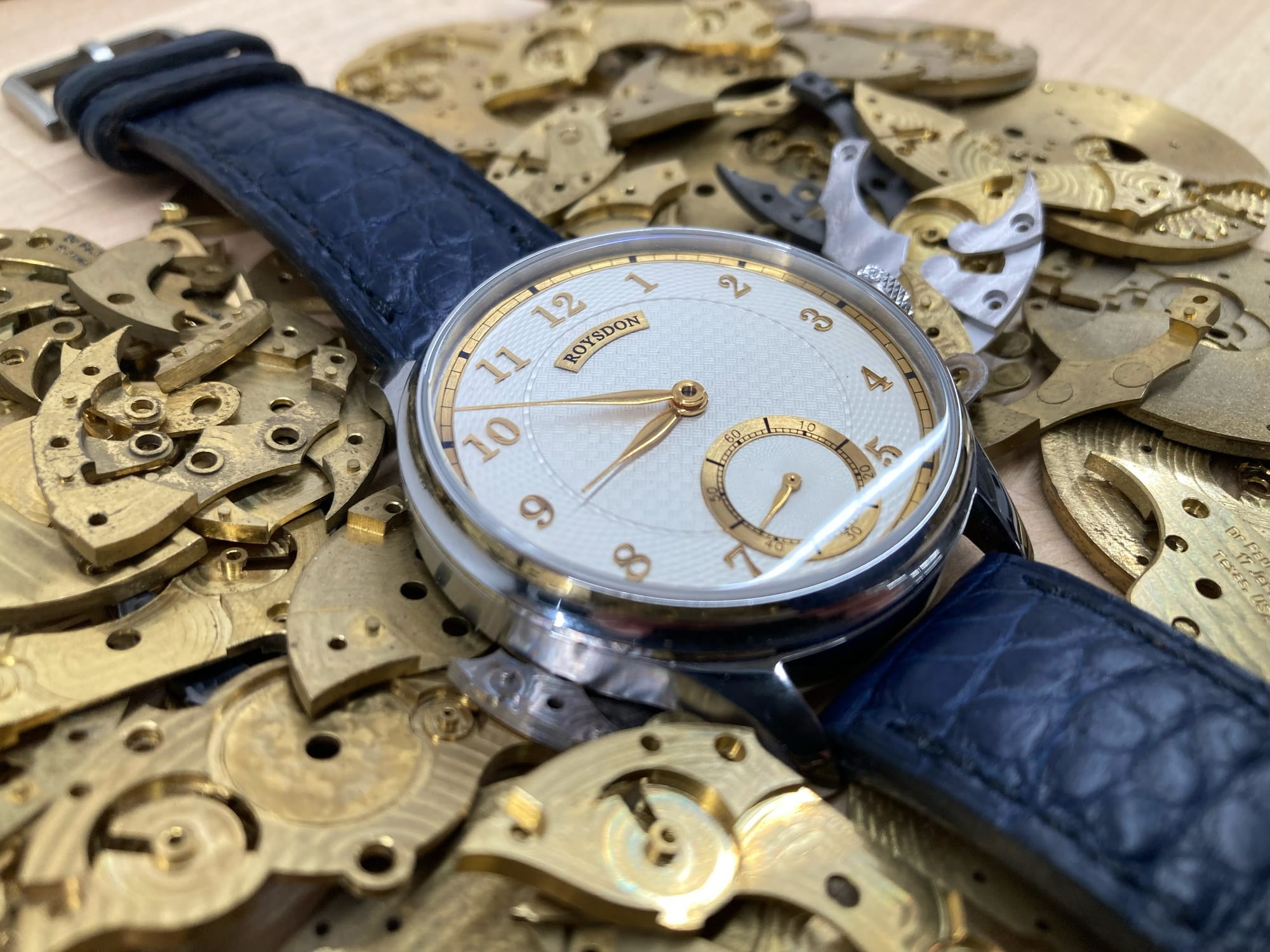
“The process to design a complete watch in CAD can take many months. After which several more months are spent determining the right materials to use, selecting the right endmills to cut the materials, determining the speeds and feeds for the CAM tool paths, and programming the tool paths for each stage, e.g., a single part like the mainplate requires 50 operations and 22 different tools.”
“Then the CNC machining begins and prototypes are made. At this stage, most parts are scraps until the right combination of endmills, paths, etc., are determined, and only then is the final part made. This process is repeated for each and every part, e.g., case, dial, hands, movement mainplate and bridges. While modern tools and methods are employed, it is definitely not an automated process just because a CNC is used.”
Measure, Verify, Begin again
Machining a precision part is only half the job. The other half is proving that what was made matches what was designed.
Our NS CNC Elara mill works at dimensions measured in thousandths of a millimeter. Finished components are then independently verified using a Keyence coordinate measuring machine (CMM), precision micrometers and a granite surface plate.
Wheels and pinions are checked for concentricity. Plates are checked for thickness. Critical features are measured against their CAD geometry.
If a part is wrong, even by an amount almost impossible to see, the answer is simple: Make another part.
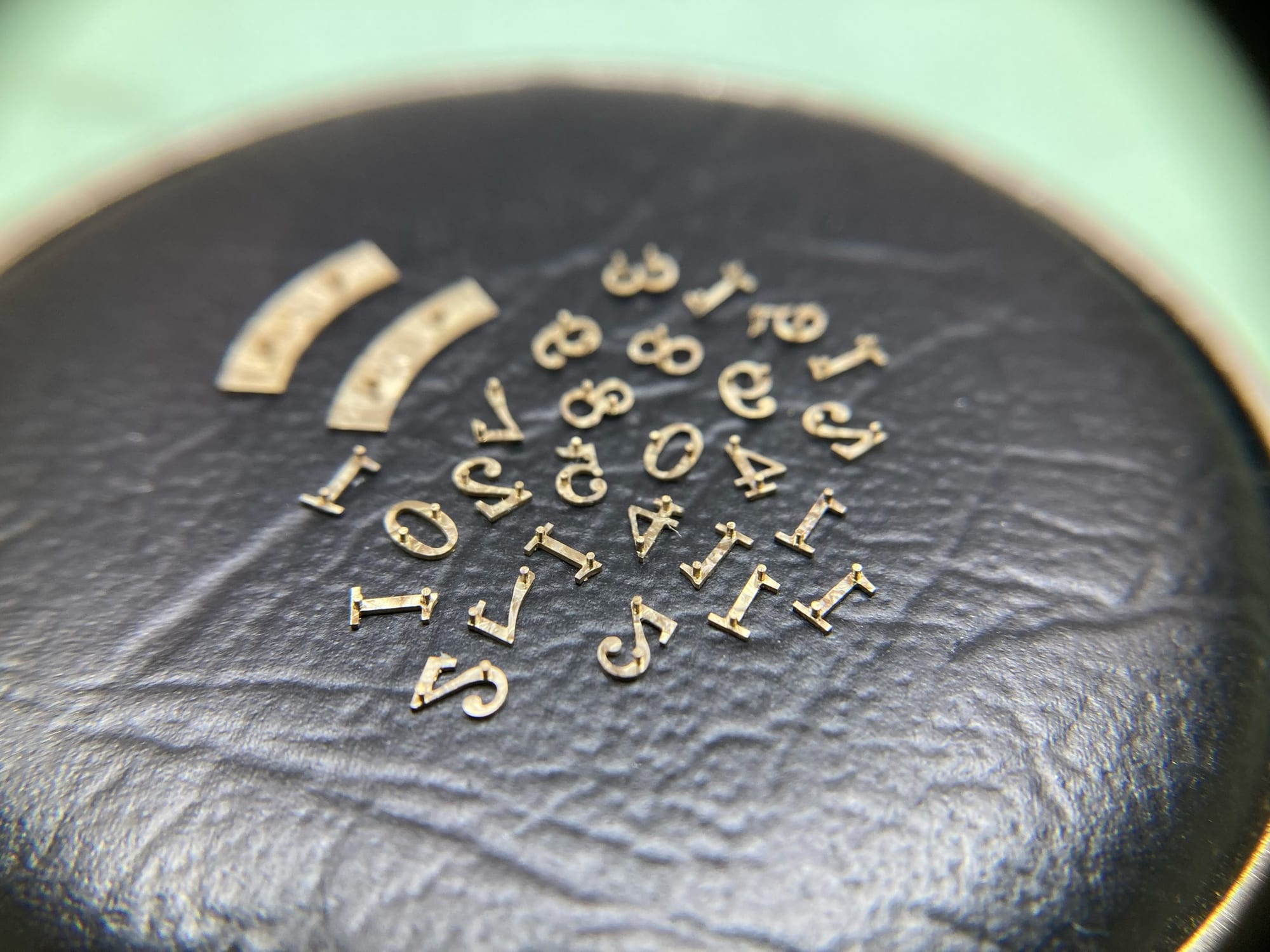
The adage, the last 10% accounts for 90% of the time spent… well this is certainly true in watchmaking, specifically polishing and finishing. For example, it takes only an hour to machine the bridges and bore the jewel holes, but this same bridges take 8 hours to finish and polish. First the “pearlage” finishing is performed on a dedicated sensitive precision drill press, then the edges are chamferred and mirror polished, and finally the parts are electroplated with 24k gold and rhodium.
A movement can function before its edges are beveled. Before its surfaces are polished. Before decoration is applied. Those hours are not required to make the machine run. They are required because Roysdon cares how the machine was made.
Depending on the watch, finishing may include anglage, black or mirror polishing, pearlage, straight graining and precious-metal plating. Each technique adds time without adding function. It reveals something else instead: the hand of the person who made it.
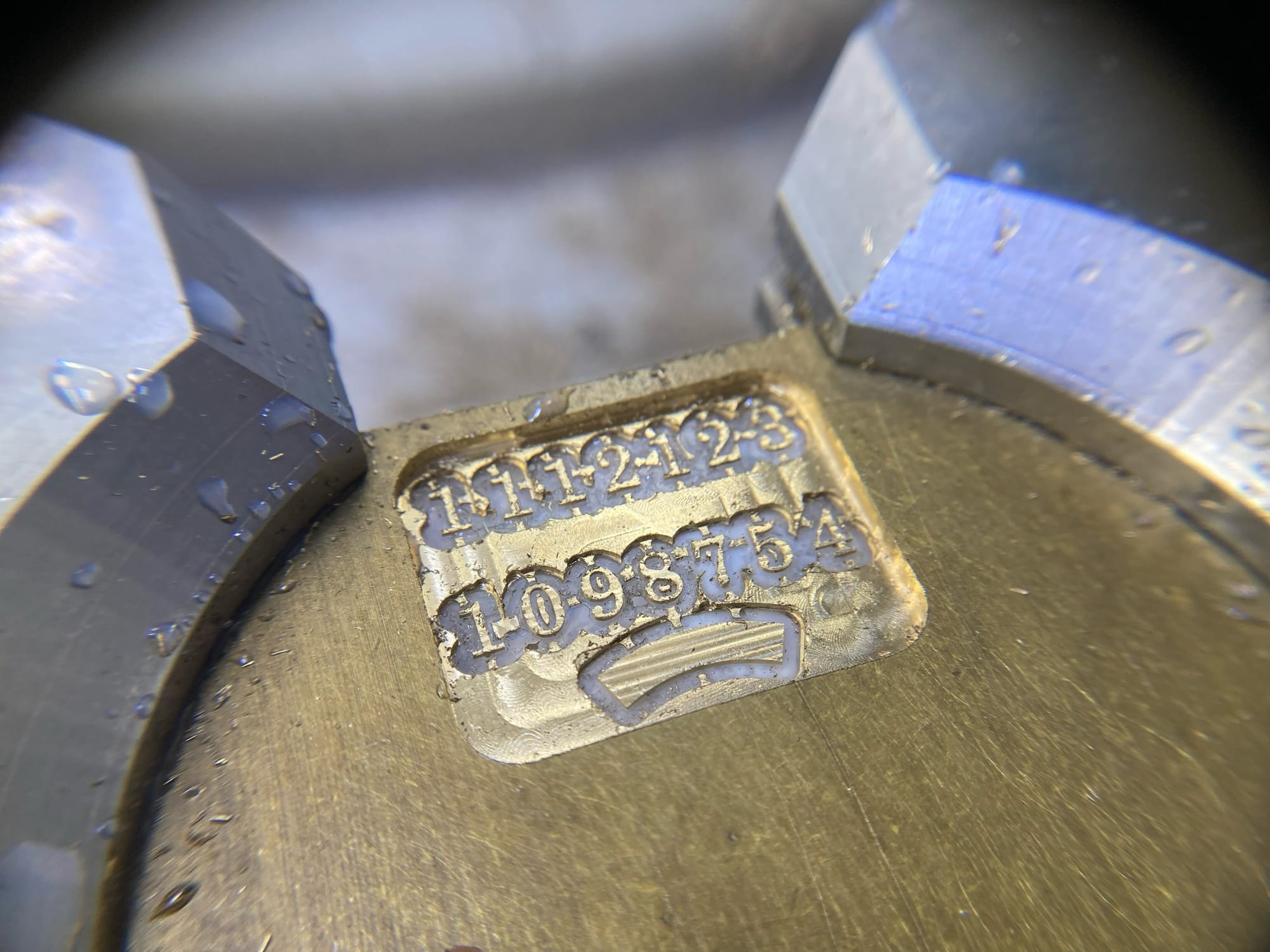
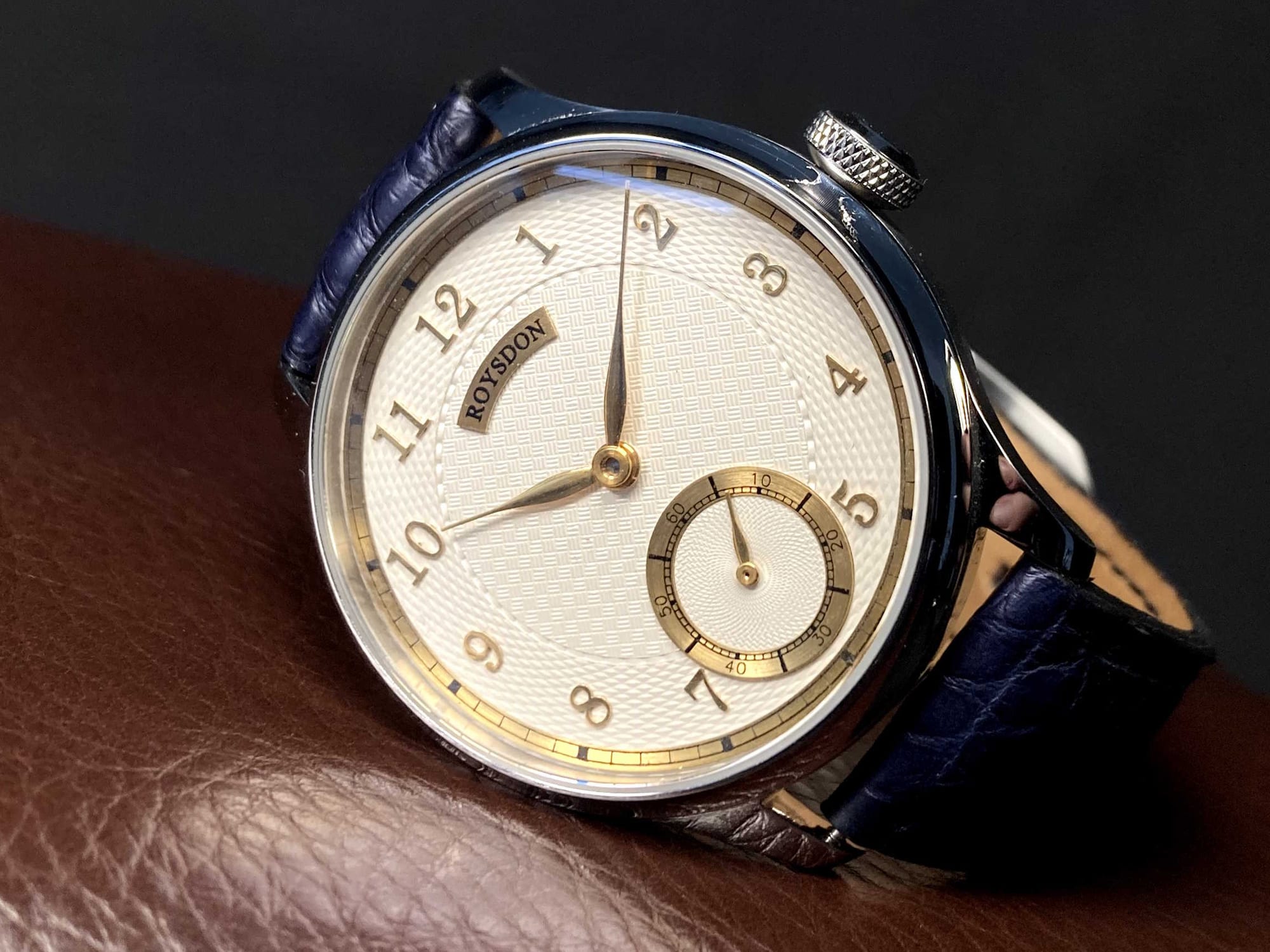
A rose engine cutting a guilloché dial: the blank turns against a fixed cutter while a pattern bar rocks the spindle, so every line is traced by the machine and steered by the hand on the crank. One pass at a time, across the whole dial.
The production of custom watches is a unique combination of modern technology and traditional craftsmanship. Today, watchmakers can use advanced 3D modeling, CAD/CAM software, and precision CNC machining to create components with a level of accuracy that would have been impossible to achieve in the past. These technologies allow even highly complex and miniature components to be designed, manufactured, and reproduced with remarkable precision.
At the same time, many traditional watchmaking techniques remain an essential part of the process. Some machines and tools used by skilled craftsmen have changed very little over the centuries. A remarkable example is the rose engine, traditionally used to create guilloché patterns on watch dials. These machines rely on mechanical principles, carefully adjusted movements, and the experience of the craftsman to produce intricate geometric patterns.
This combination of technologies is particularly important in the production of custom and independent watches. CNC machining can provide the precision required for internal mechanical components, cases, bridges, plates, and other parts, while traditional machinery and hand finishing add the character and craftsmanship that distinguish a truly individual timepiece.
Rather than replacing traditional watchmaking, modern CNC and 3D technologies complement it. The result is a fascinating combination of engineering and craftsmanship, where cutting-edge manufacturing technology works alongside techniques that have been preserved and refined by generations of watchmakers.
A remarkable example can be found at the Plumier Workshop in Pennsylvania, home to a collection of rare antique machine tools. Unlike a museum, Plumier keeps these historic machines fully restored, maintained, and in active use.
The NS CNC Elara 2 is the first CNC machine to join this remarkable workshop. Its arrival creates a unique connection between traditional craftsmanship and modern manufacturing technology. While the antique machines rely on mechanical mechanisms and the skill of the craftsman, Elara uses computer-controlled precision and modern CNC technology.
Yet the fundamental goal is the same: to transform material into precise mechanical components.
The Elara 2 is therefore more than a modern machine in a historic workshop. It is a tangible example of how technologies separated by centuries can work side by side, combining traditional craftsmanship with modern precision to create something truly unique.
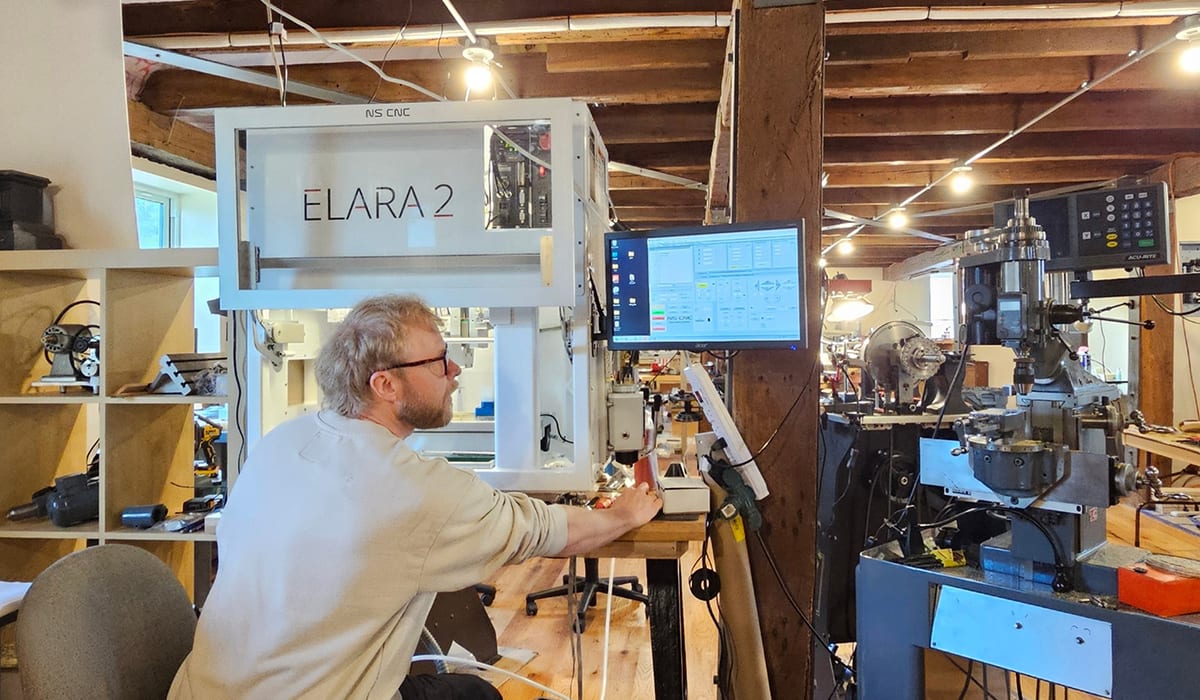
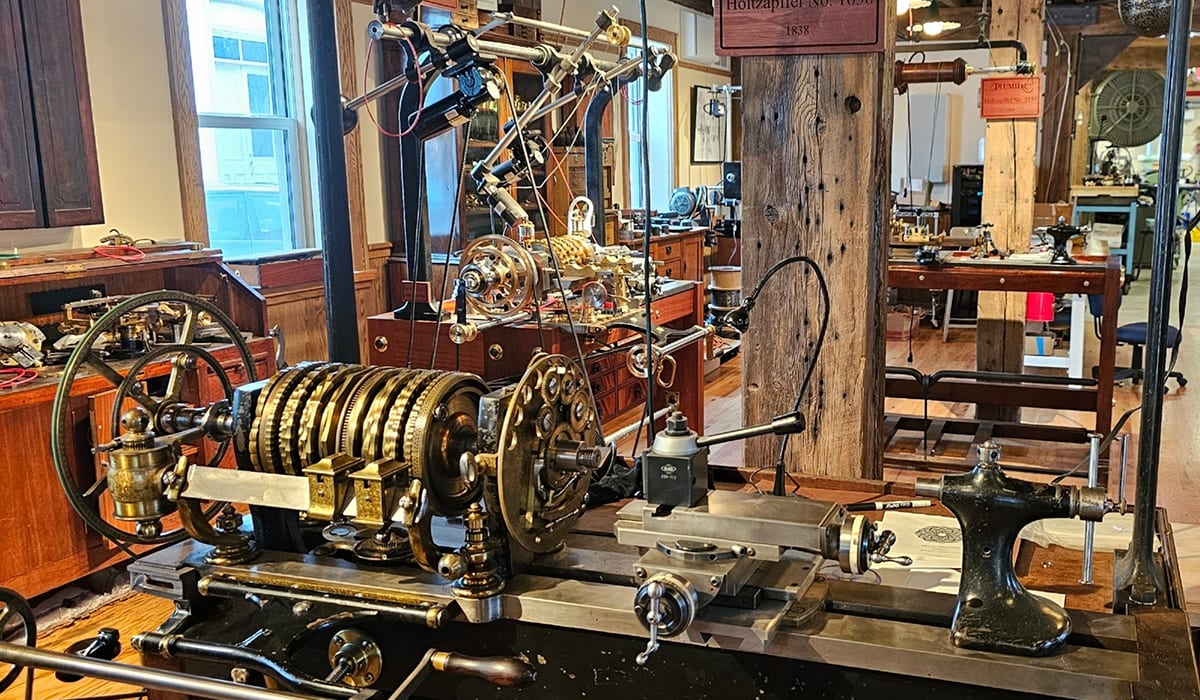
Machining demonstrations across NS CNC machines - milling, turning, and finished parts on camera.
Send a part drawing - material, dimensions, tolerances. We’ll tell you whether it’s an Elara part, how we’d run it, and what the machine costs.
The mill on this page - strong base and carriages, 3-axis milling, and the optional 4-axis swivel head, on its own page.