Company
NS CNC manufactures both standard production machines and fully custom CNC machines. A custom machine can be designed and built from scratch to meet a client's specific requirements, ideas, or drawings. We can also modify and customize our standard machines to meet specific applications and requirements. This page explains the customization options available for NS CNC machines.
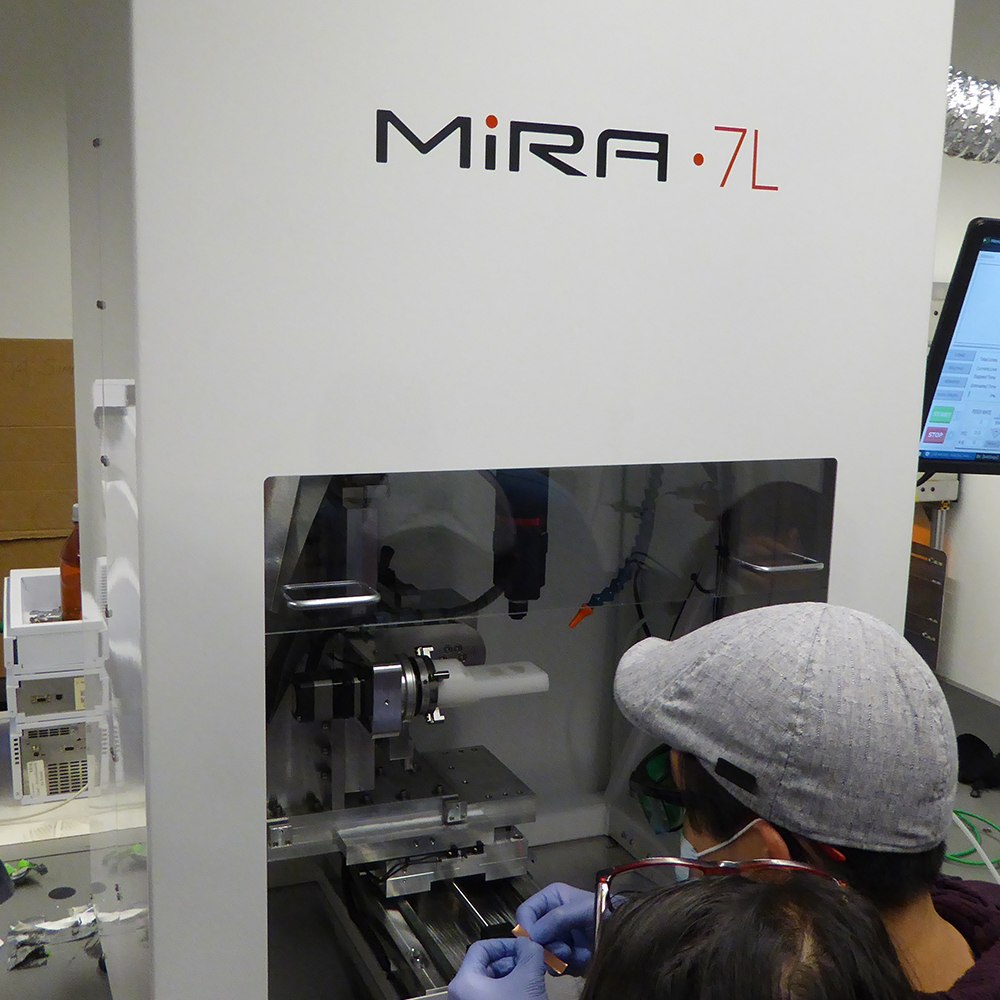
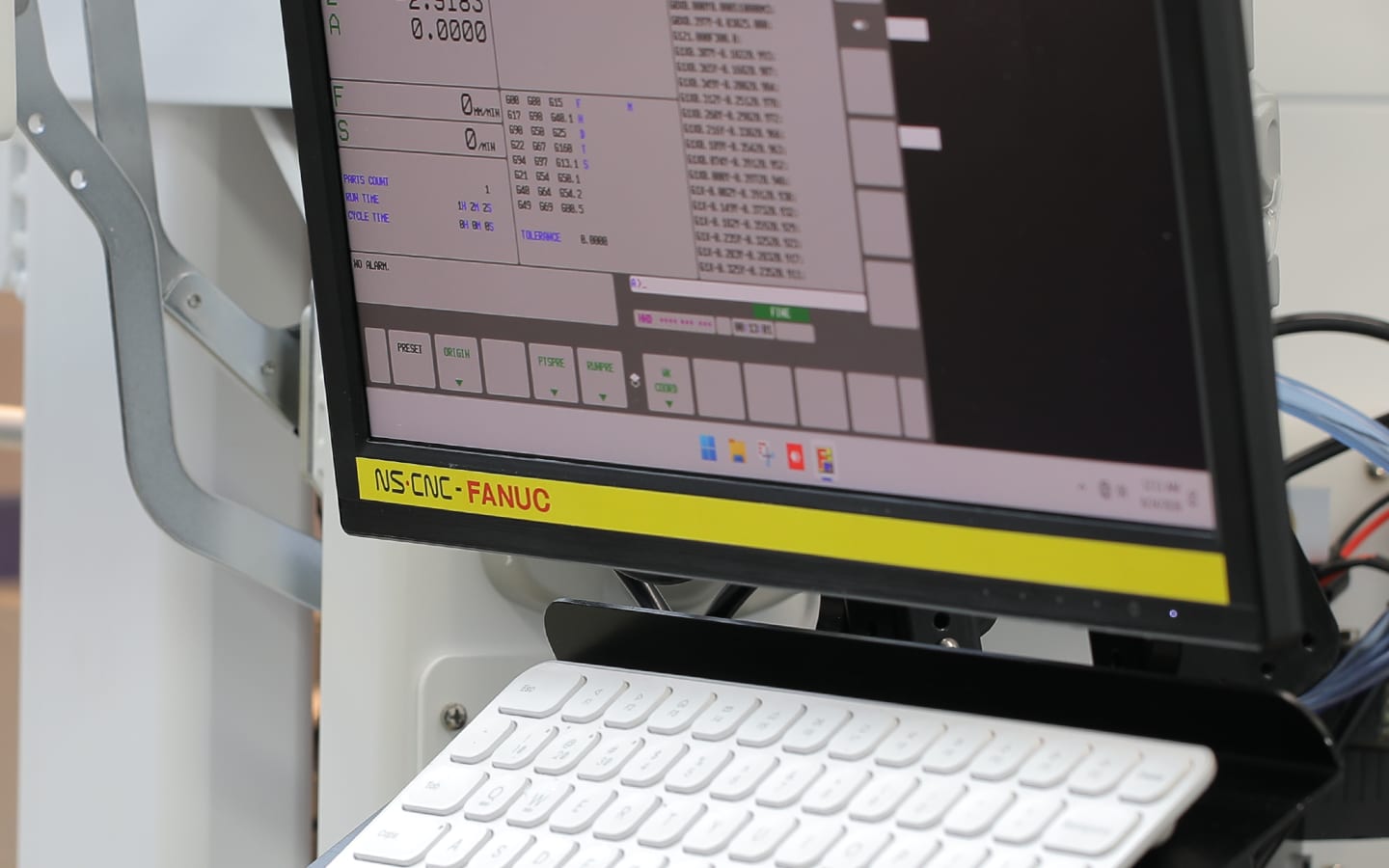
As part of a custom machine configuration, NS CNC can replace its standard control system with a complete FANUC CNC control package. The FANUC configuration includes FANUC servomotors, servo drives, CNC controller, I/O modules, cables, and FANUC software, providing a fully integrated industrial CNC control architecture.
FANUC is one of the world's leading CNC control and automation companies, and its systems are widely used throughout the machine-tool industry.
Compared with the standard NS CNC control system, the FANUC configuration is more sophisticated and significantly more expensive, but it offers the advantage of using a familiar control platform and architecture. This option is particularly valuable for companies that already operate FANUC-equipped CNC machines.
The new NS CNC machine can then be integrated into an existing production environment, allowing operators, programmers, and maintenance personnel to work with a familiar control system across the entire machine fleet. The result is a custom NS CNC machine built around the FANUC ecosystem while retaining the mechanical precision and capabilities of the NS CNC platform.
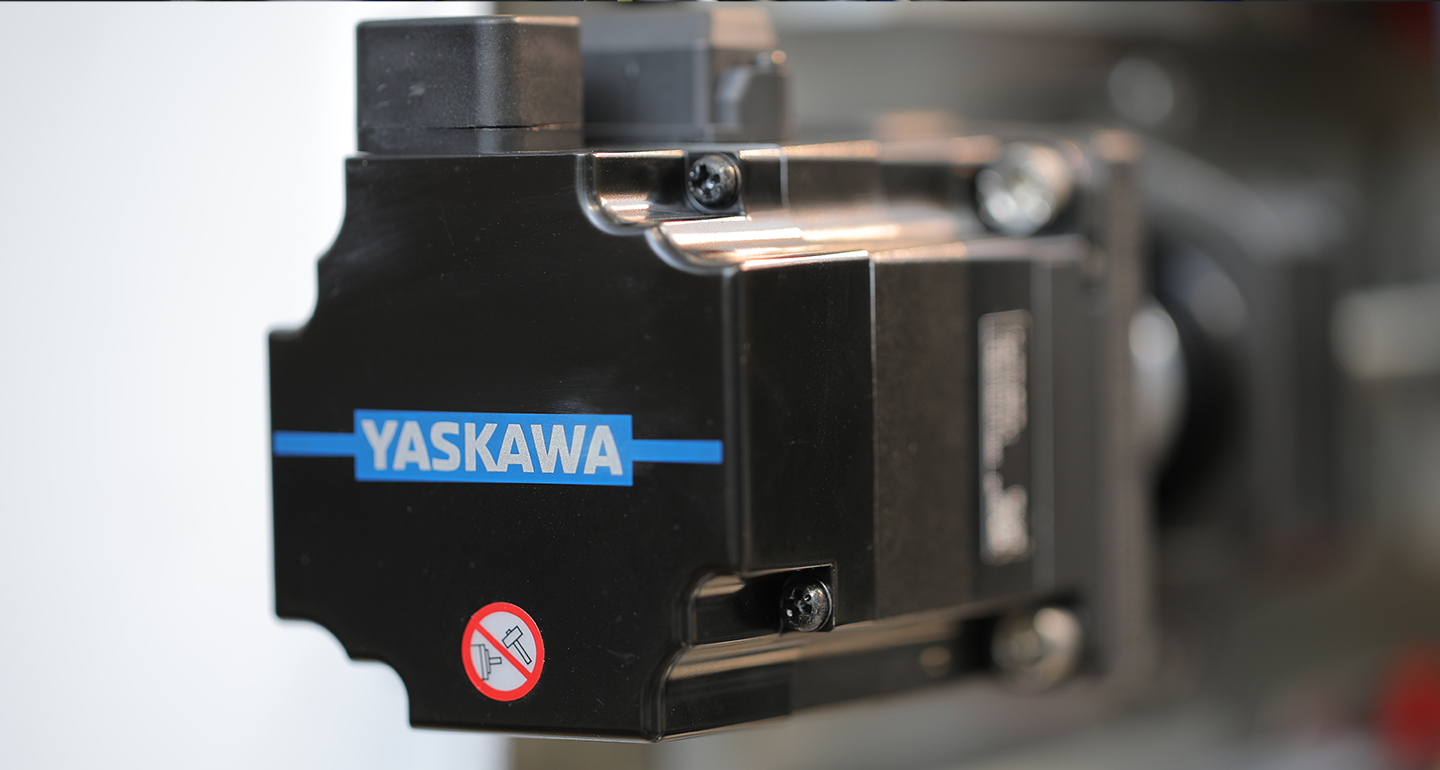
The accuracy of a machine's carriage movement depends on a number of parameters. One of the most important is the servo motor's accuracy, either its resolution or the minimum step, which is determined by the motor's encoder and measured in bits. The smaller the encoder's step, the higher the motor's accuracy can be.
The table and graph show the ratio of bits to the minimum step.
Traditional servo motors for small desktop machines have 16-bit encoders. This is sufficient for basic types of micro-milling. However, if you require higher resolution, we can install motors with smaller-step encoders on your machine.
Keep in mind that a smaller encoder's step is more expensive and requires larger, more expensive drivers.
Although modern servomotors can have up to 26- and even 27-bit encoders, whose minimum steps are hundreds of times smaller than, say, 22 or 23-bit encoders, using them doesn't necessarily mean the machine will be a hundred times more accurate.
Many other factors also influence machine accuracy.
| Encoder resolution | Steps per revolution |
|---|---|
| 12 bit | 4,096 |
| 14 bit | 16,384 |
| 16 bit | 65,536 |
| 18 bit | 262,144 |
| 20 bit | 1,048,576 |
| 22 bit | 4,194,304 |
| 24 bit | 16,777,216 |
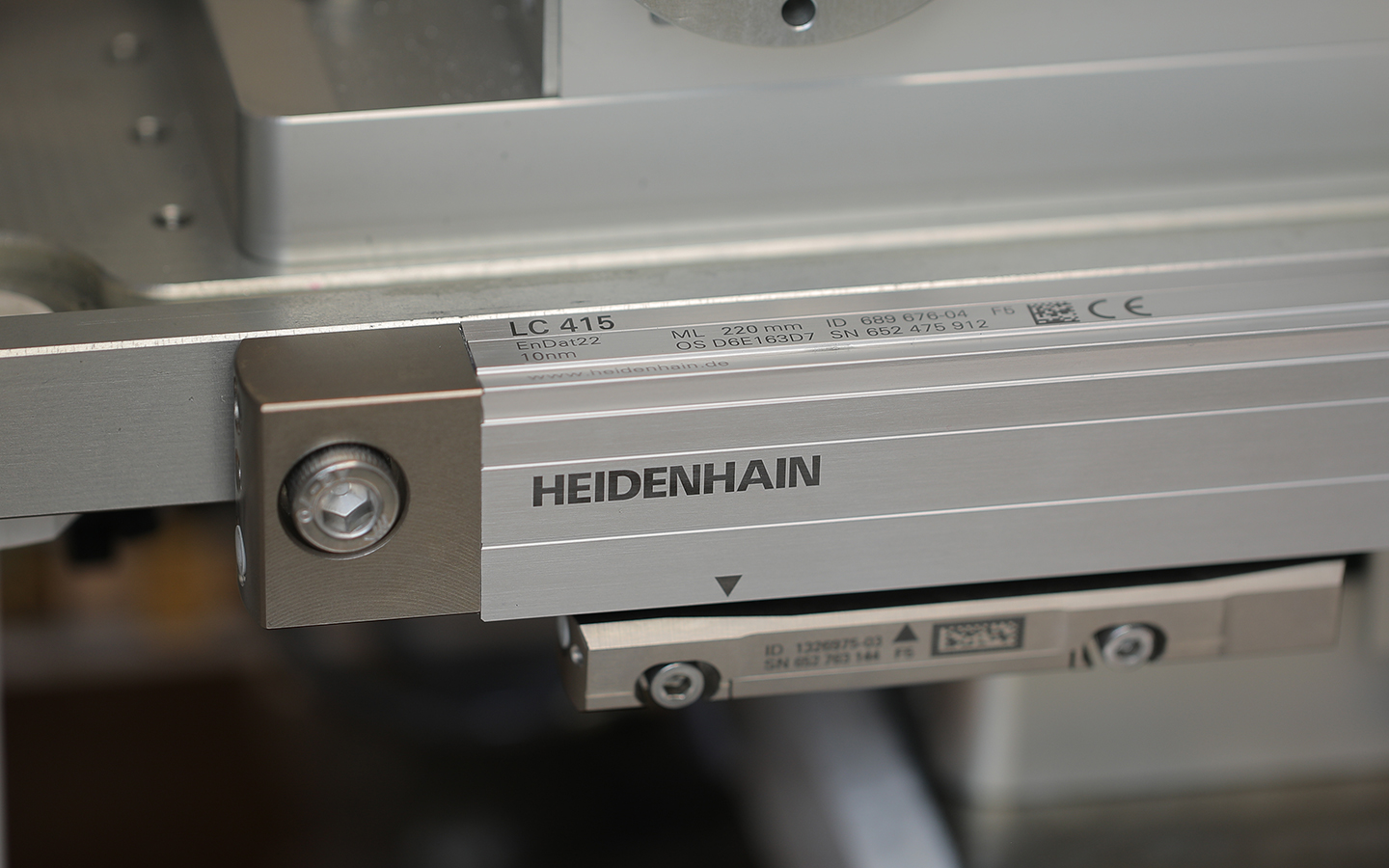
Another way to increase the positioning accuracy of the machine is to install additional scales or linear encoders on the carriages. Linear encoders are scales that are fixed along the carriage.
A reading head is attached to the moving carriage itself, which reads the actual position and transmits a digital signal to the controller.
The controller analyzes the signal, and if the actual carriage position differs from the programmed position, it sends an additional signal to the motor driver, which corrects the position.
There are two types of linear encoders: optical and magnetic. Optical encoders are much more accurate than magnetic ones, but are more sensitive to dust and contamination. We typically use optical encoders on our NS CNC machines.
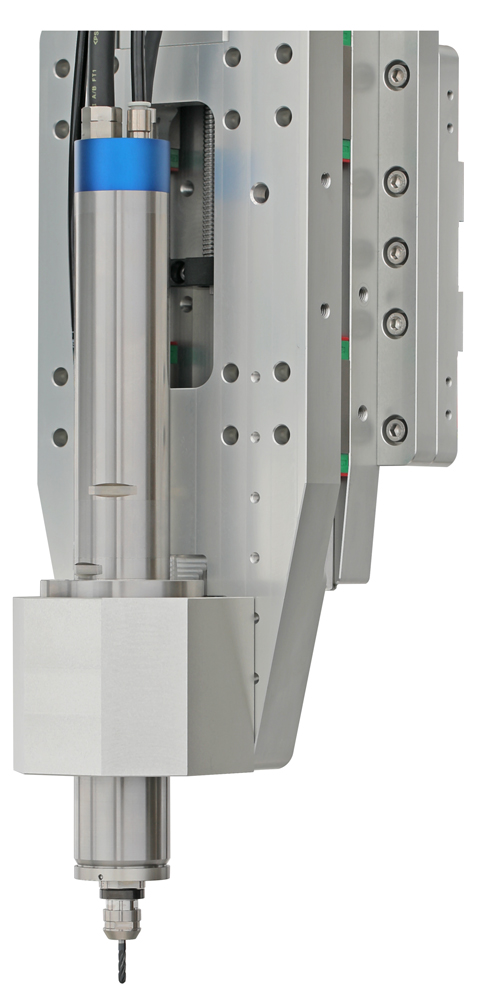
NS CNC uses Nakanishi spindles on all its machines. Nakanishi is the global leader in the production of high-precision spindles for desktop machines.
Standard production machines are equipped with E2000 or E3000 series spindles, rated at 200W and 350W. The 350W spindle is sufficient for milling any metal and soft stone.
If you need a more powerful spindle, Nakanishi offers the 1200W E4000 series. It is longer and features air bearings, ensuring a runout of less than 1 micron.
To keep the air bearings working properly, the spindle requires a constant supply of purified air. This can create additional difficulties for users with a small workshop and no powerful compressor. Without this air, the spindle will not rotate at all.
Want to learn more about Nakanishi spindles? Click on the logo link below.

| Spindle series | Output power |
|---|---|
| E2000 | 200 W |
| E3000 | 350 W |
| E4000 | 1,200 W |
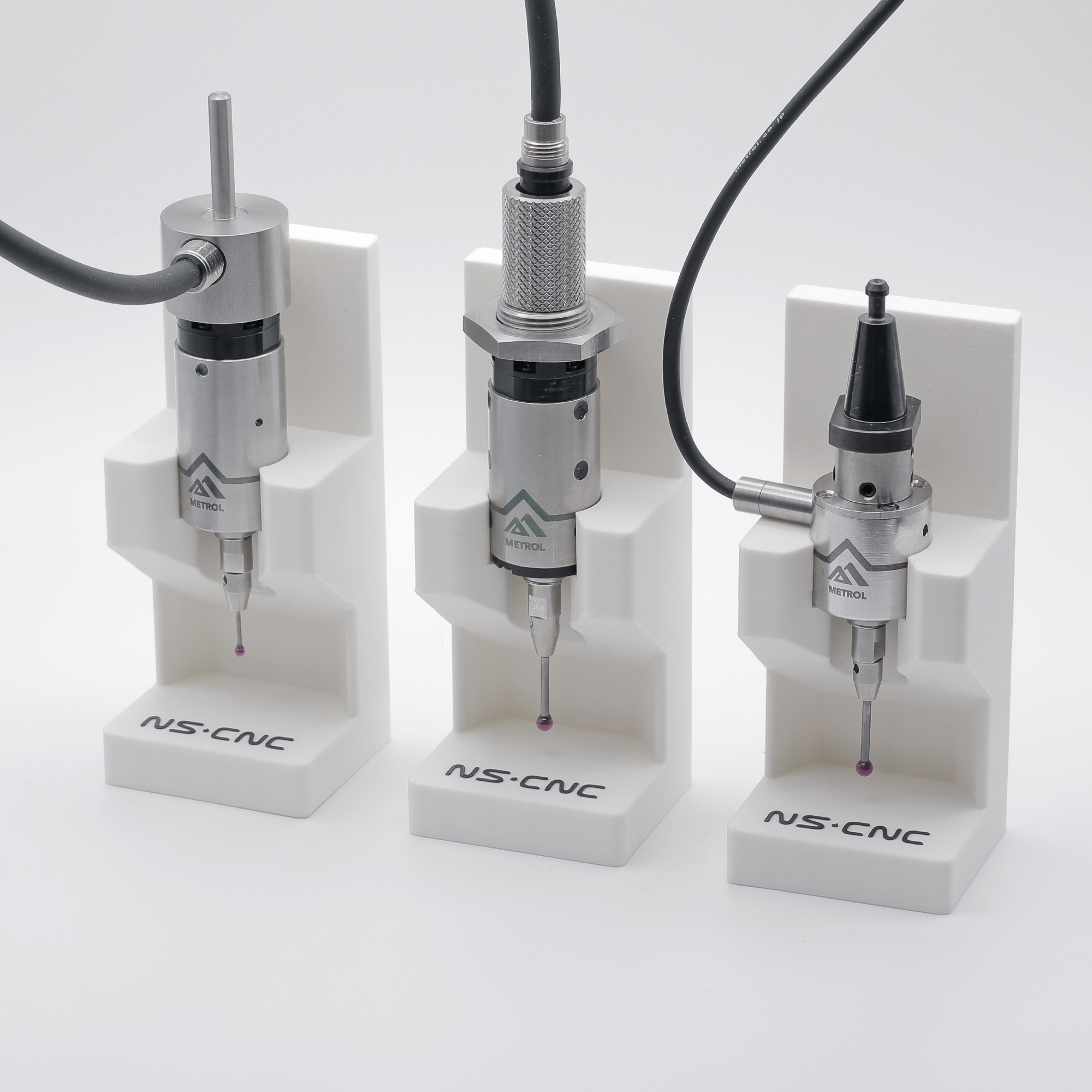
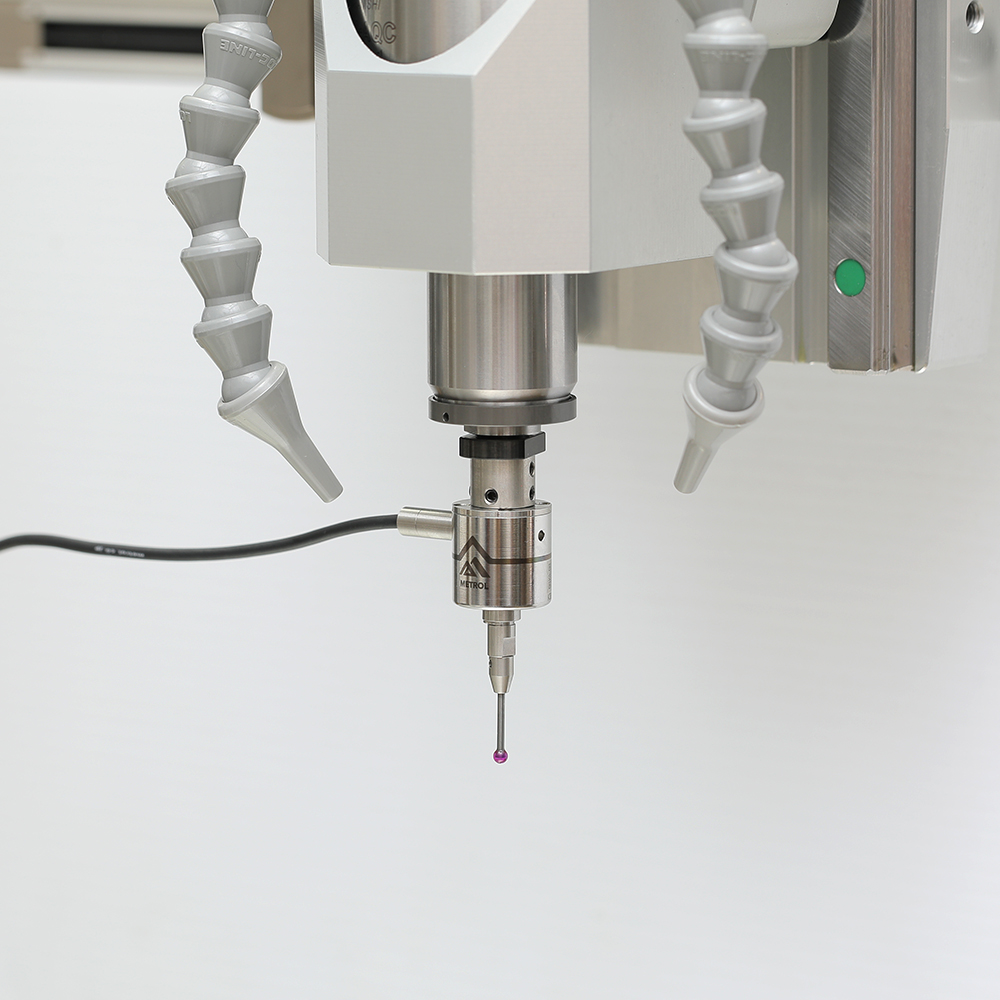
The Japanese company Metrol is the only manufacturer in the world specializing in high-precision miniature wire sensors, edge finders, and 3D probes. These sensors offer exceptional reliability and are resistant to water and dust, making them well suited for demanding machining environments.
NS CNC machines can be equipped with three types of Metrol probes: Series I, Series W, and Series M. Each series is designed for different applications and machine configurations.
To select the right probe for your NS CNC machine, consult with our specialists.
Want to learn more about Metrol 3D probes? Click on the logo link below.

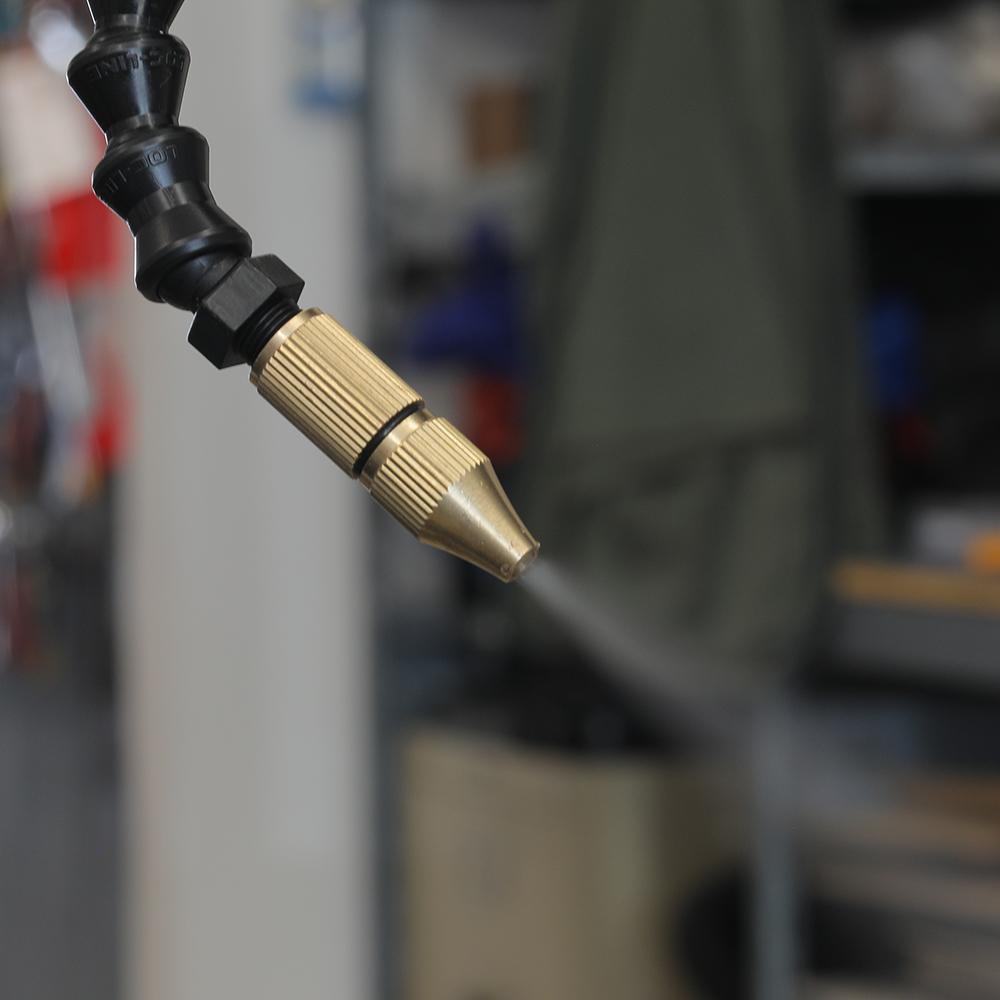
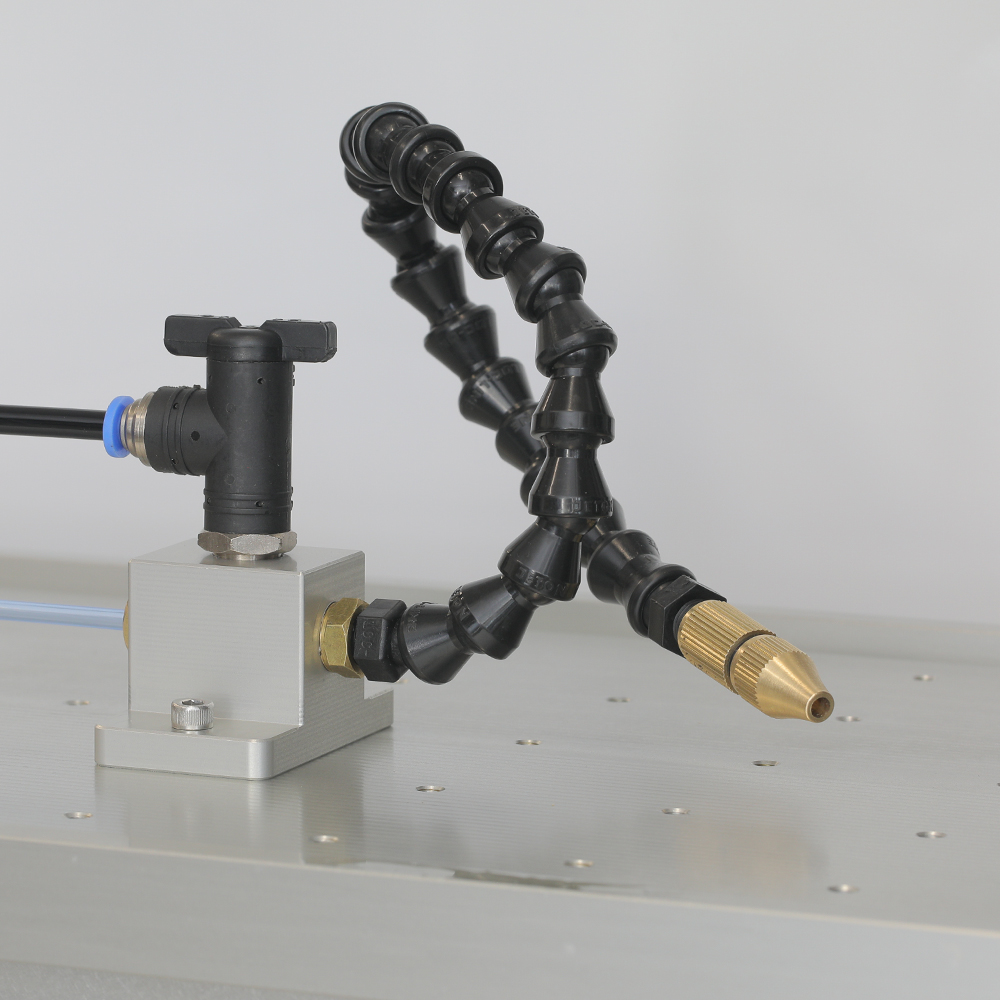
As an optional extra, we can install a mist supply on the machine. Unlike traditional coolant, mist is a mixture of coolant and air, which is supplied under pressure to the machine's work area. The mist blows away chips much more effectively than the coolant.
In addition to blowing away chips, the mist lubricates the cutter, preventing it from overheating. Depending on the milling task and strategy, the mist nozzle can be mounted on the spindle or on the X-table. Multiple nozzles can be used for better airflow across the work area.
The supply of coolant and air in the mist can be controlled by manual regulators. If necessary, we can make the mist turn on and off with a separate output signal and a relay switched on by a command, for example M7.
The use of mist requires an air supply and exhaust.
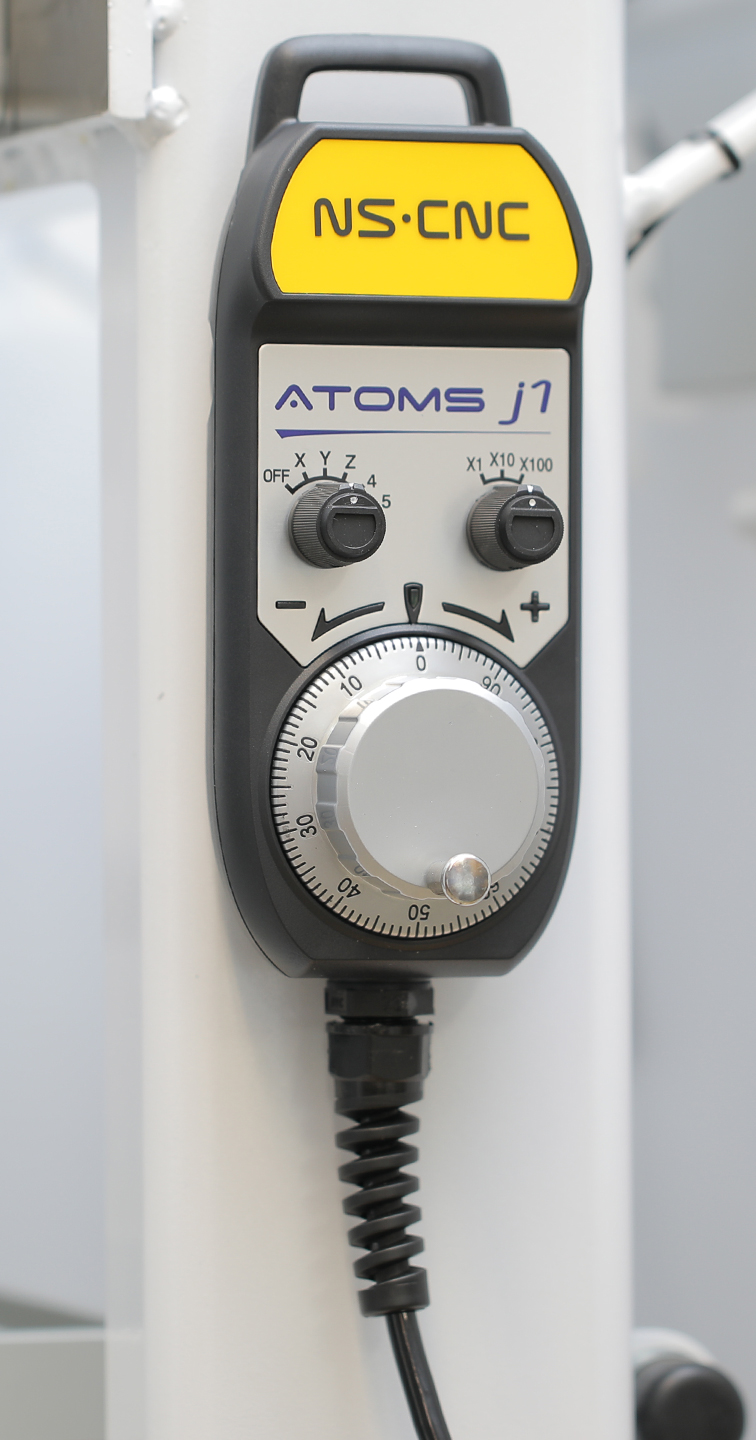
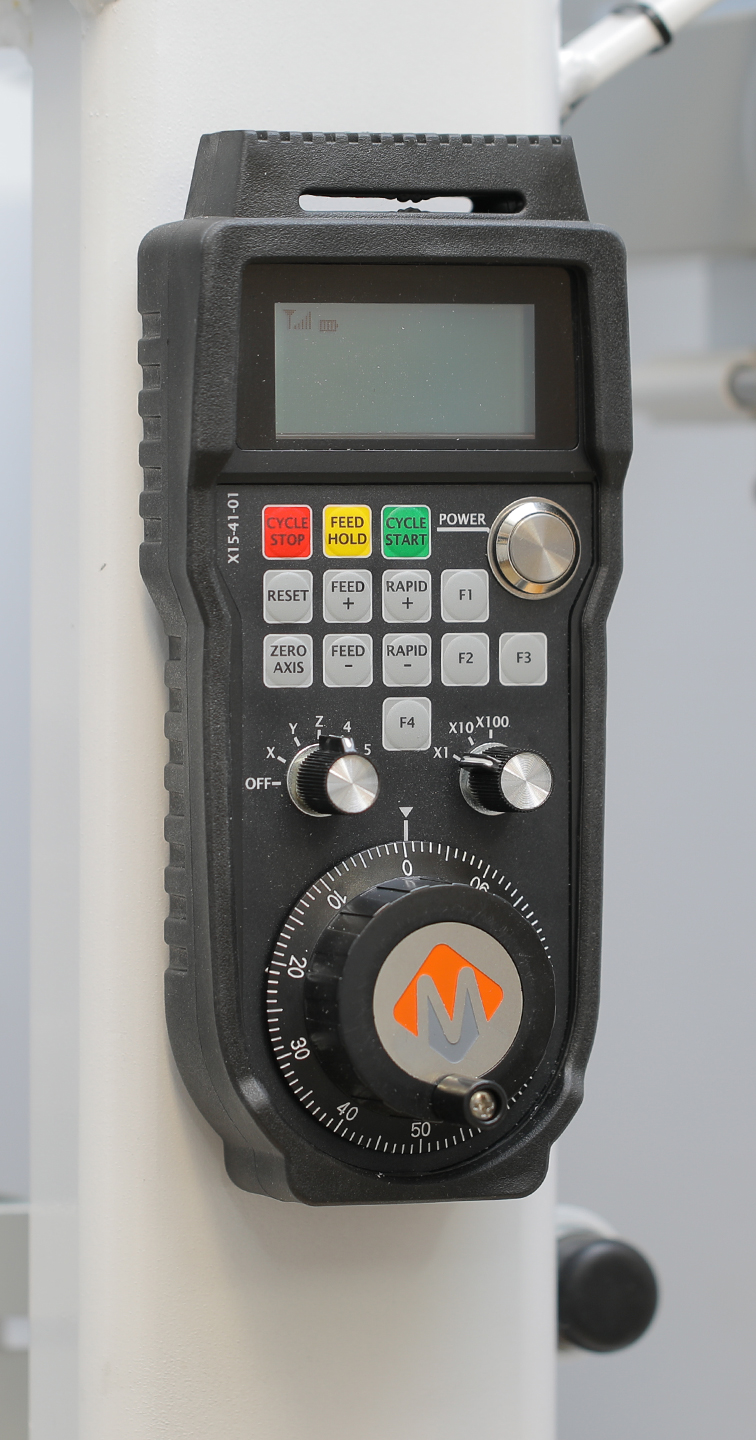
An MPG pendant is a handheld unit with a graduated handwheel that moves the machine axes by hand, one encoder step per click. It connects to the control and lets the operator jog the machine while standing next to the work rather than at the screen.
One rotary selector sets which axis the wheel moves - X, Y, Z, or a rotary axis - and a second sets the step size, X1, X10, or X100 encoder counts per click. Turning the wheel one way or the other jogs the selected axis in the minus or plus direction.
The pendant is used for setup work: touching off tools, finding edges and part zero, positioning the spindle for a manual operation, and jogging clear after a stop. The X1 step makes it possible to close in on a surface a few microns at a time without overshooting.
You can order a traditional MPG pendant with a coiled cable or a wireless pendant with Bluetooth connectivity.
All MPG pendants feature a magnetic back for convenient attachment to any steel surface and are enclosed in a durable rubber casing for added protection.
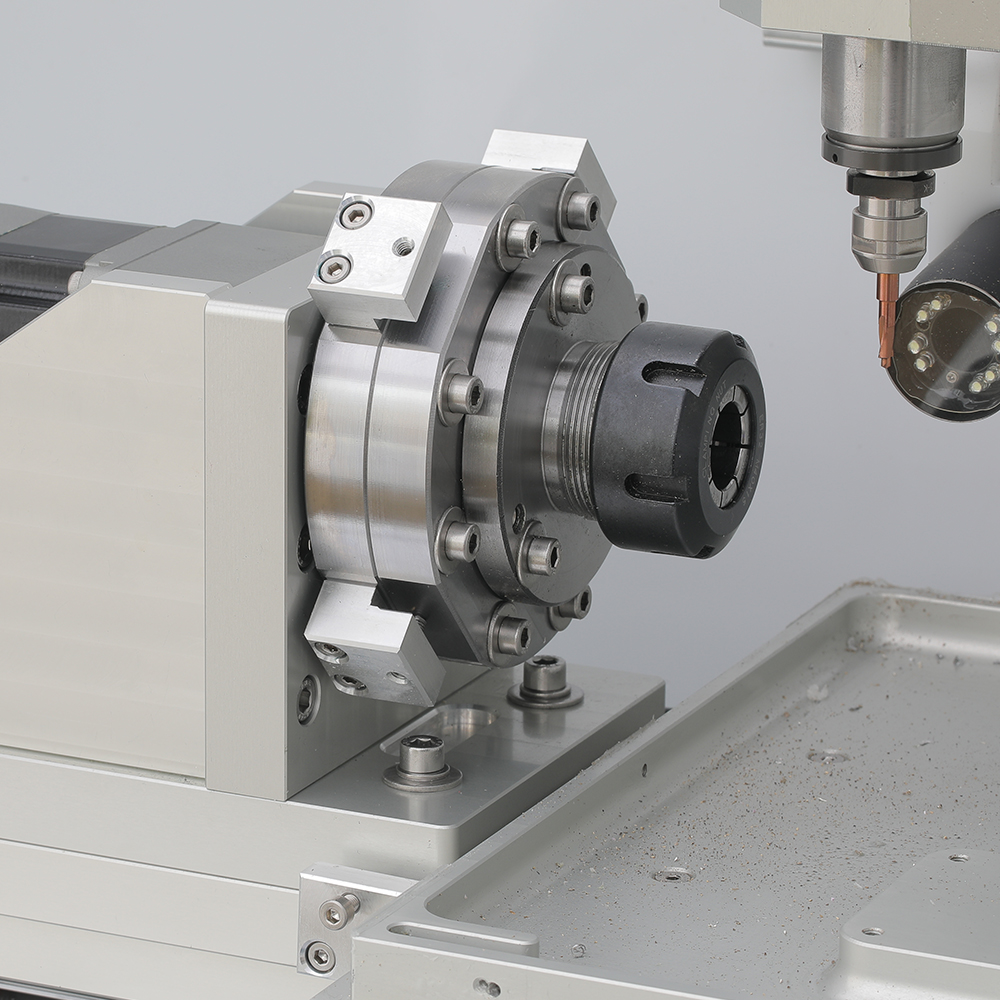
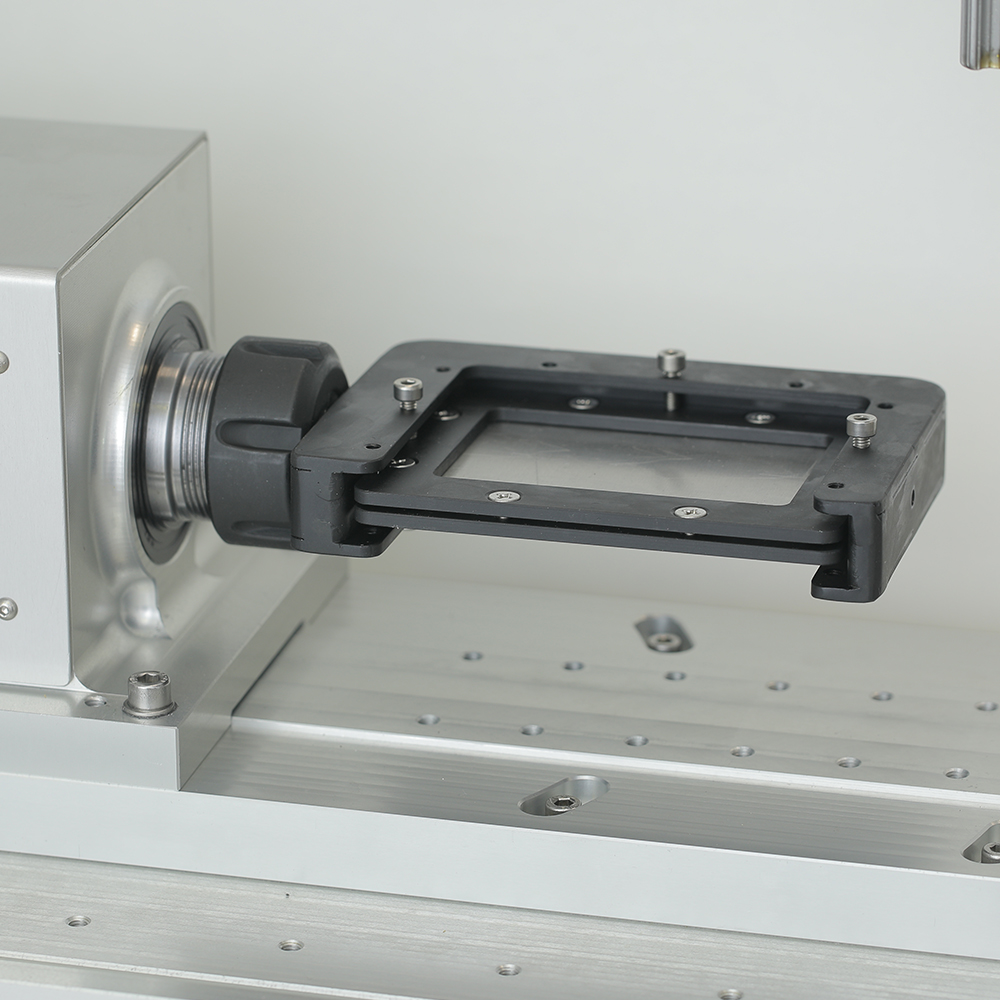
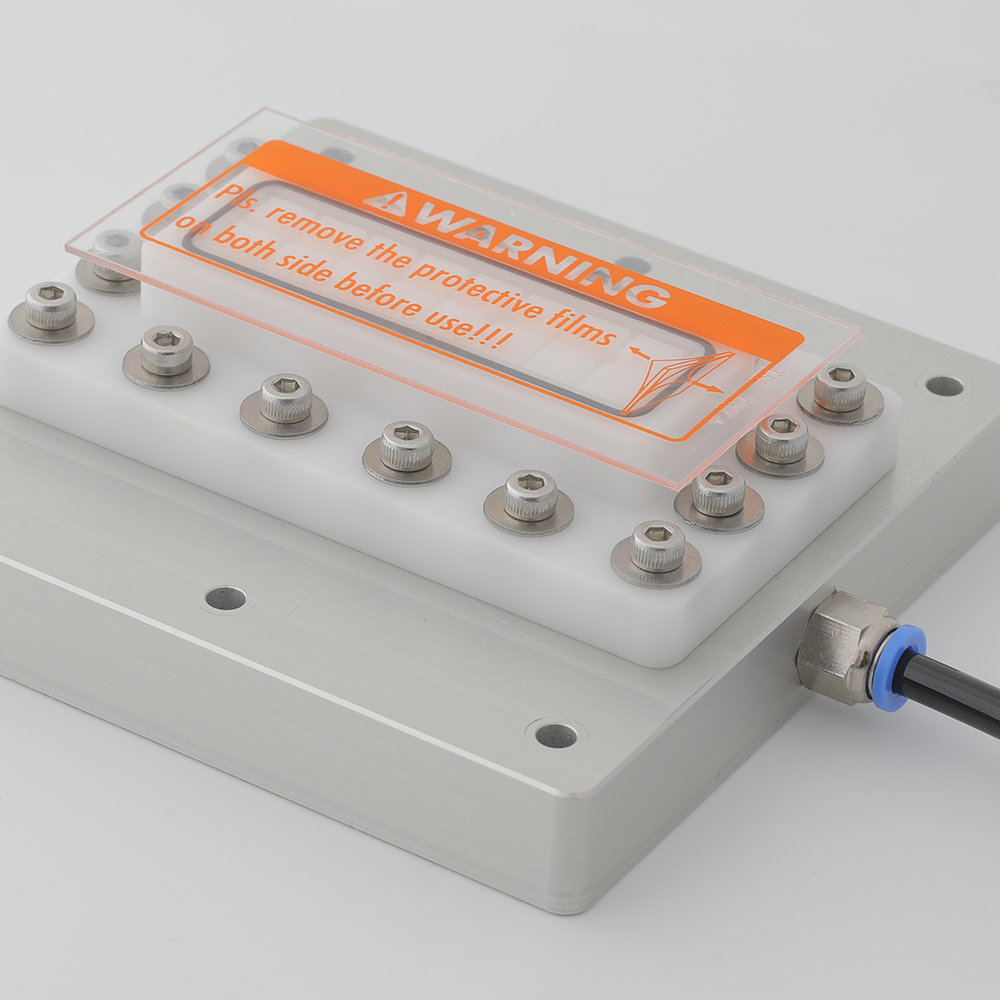
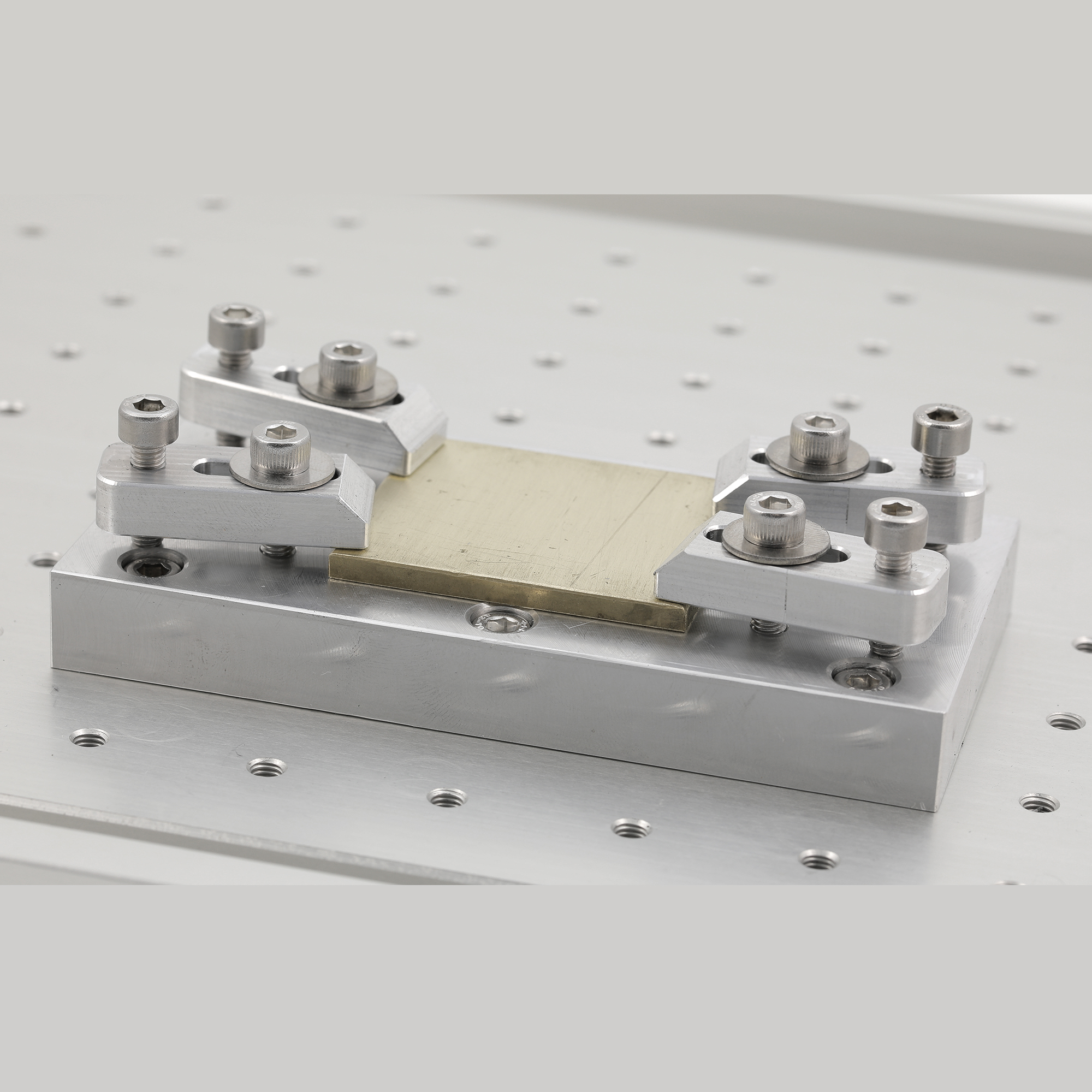
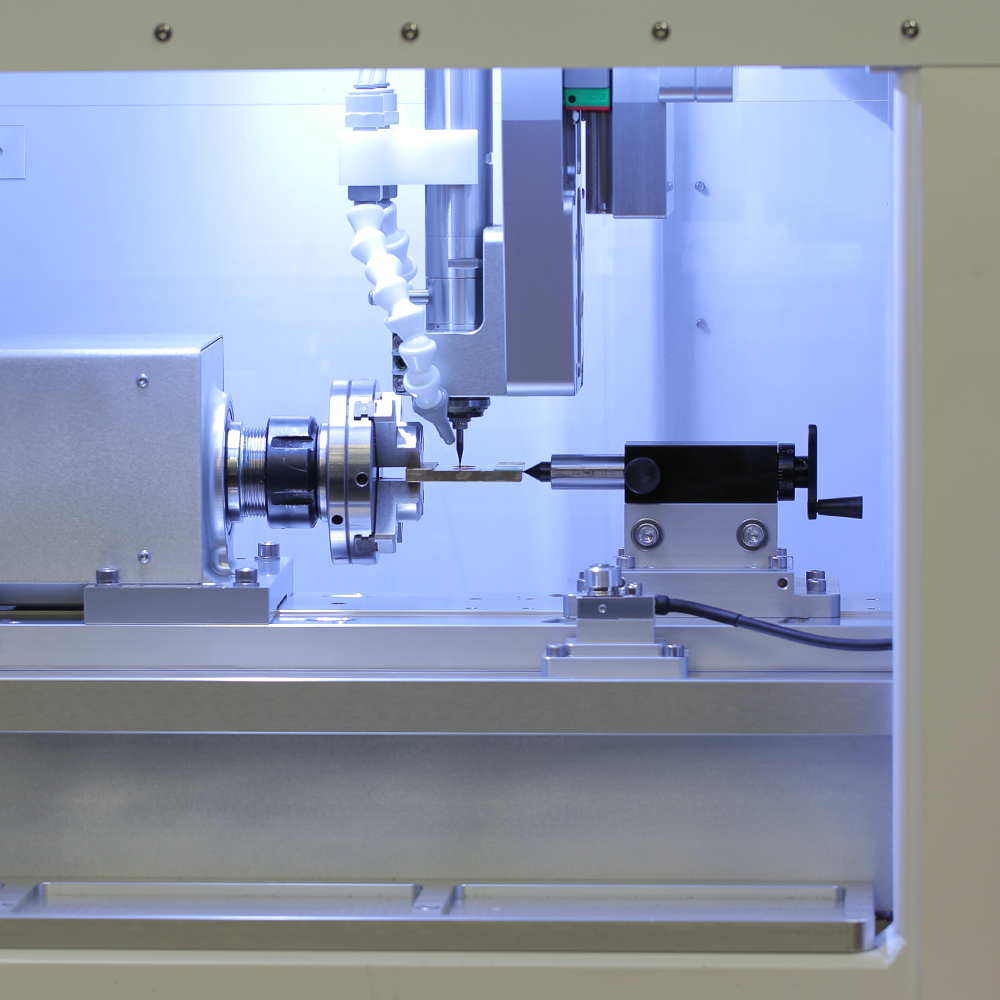
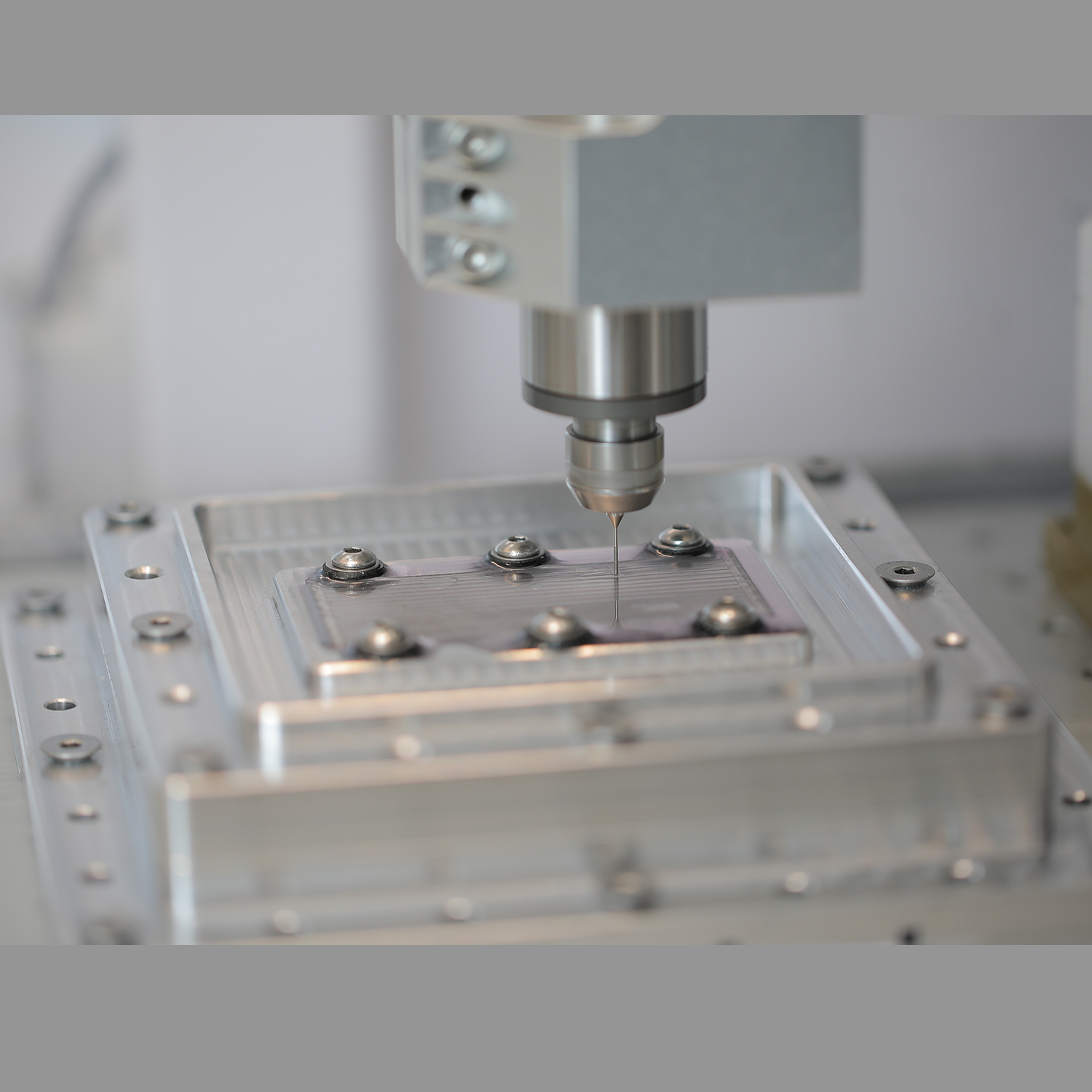
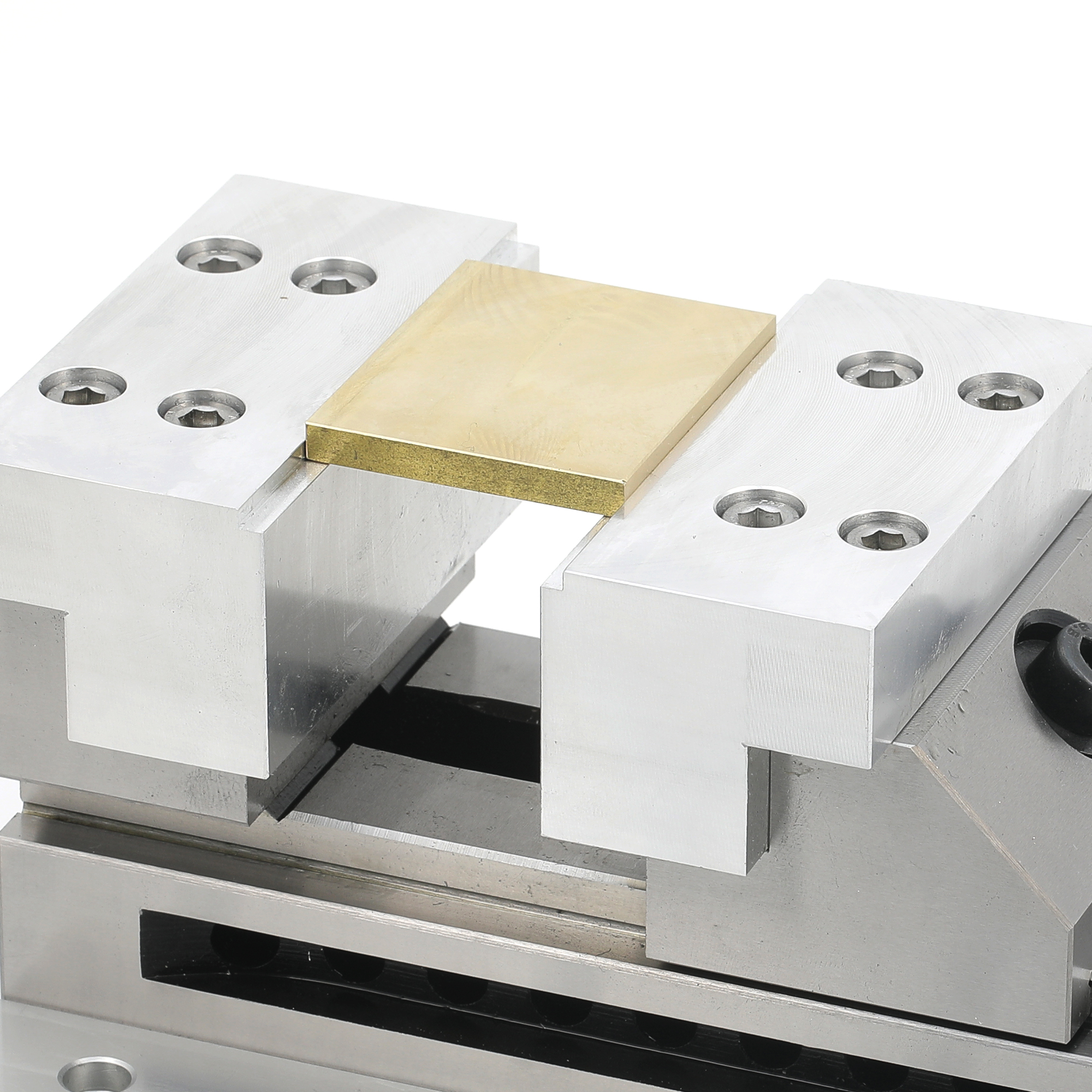
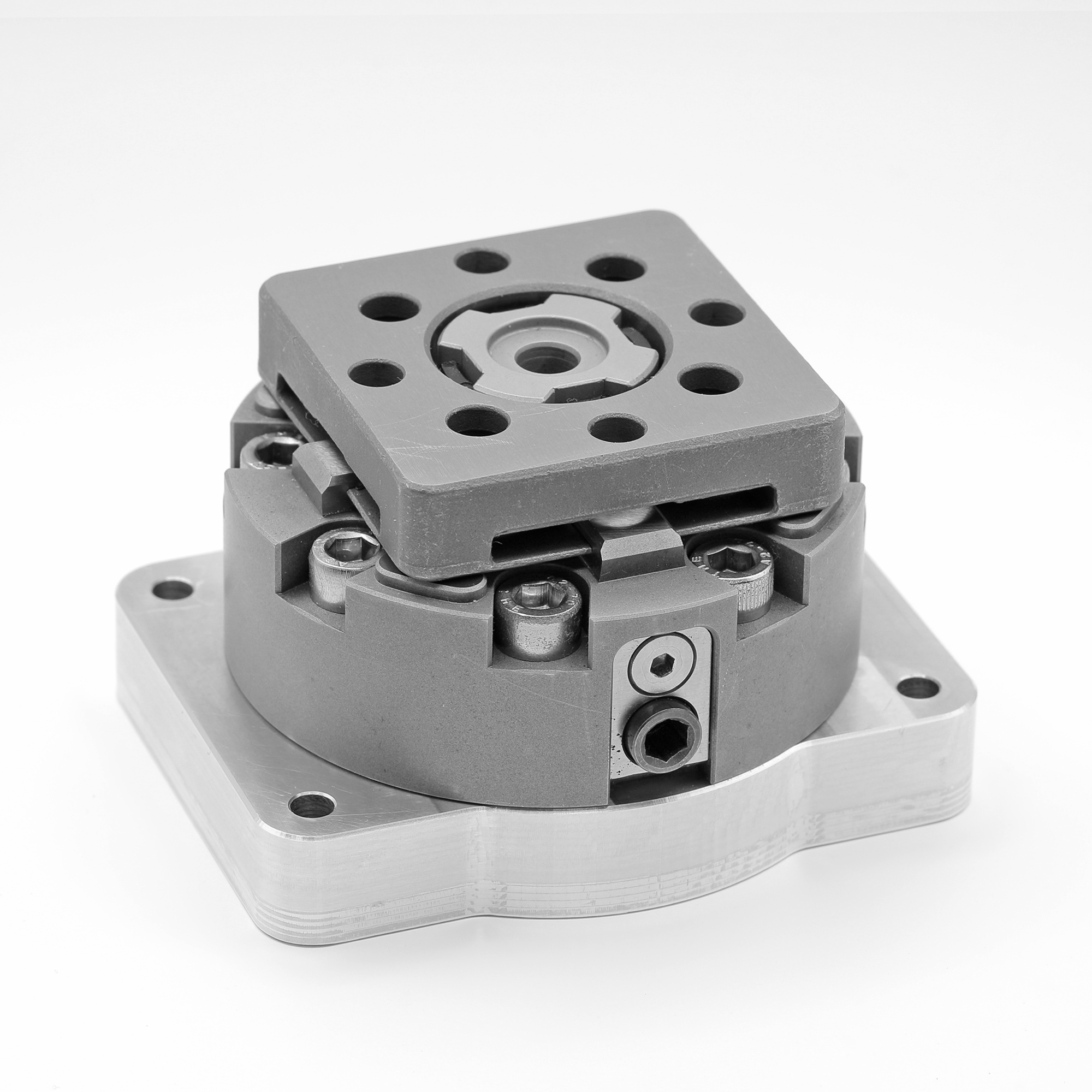
Three of the custom builds, running. Filmed in our Surrey, BC facility and at customer sites.
2-axis micro lathe in motion
5-axis milling with tool change
Channel-milling on plastic
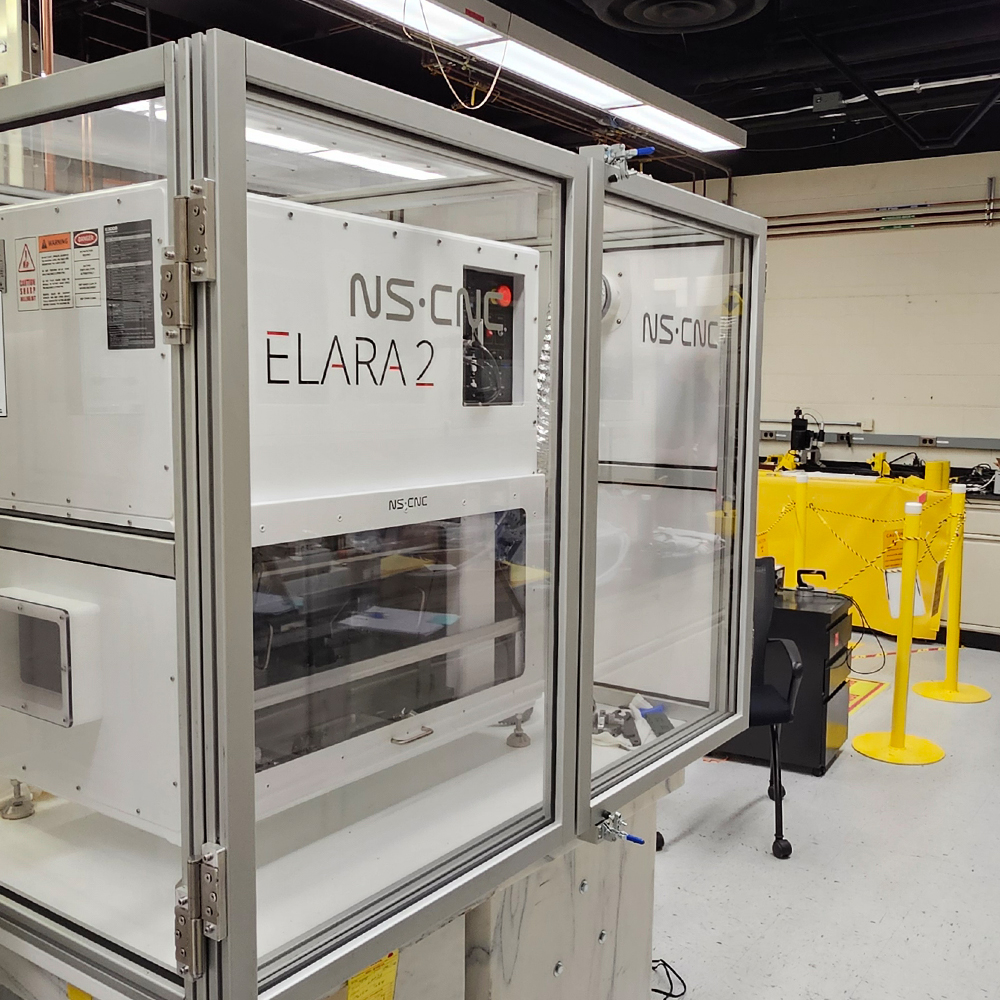
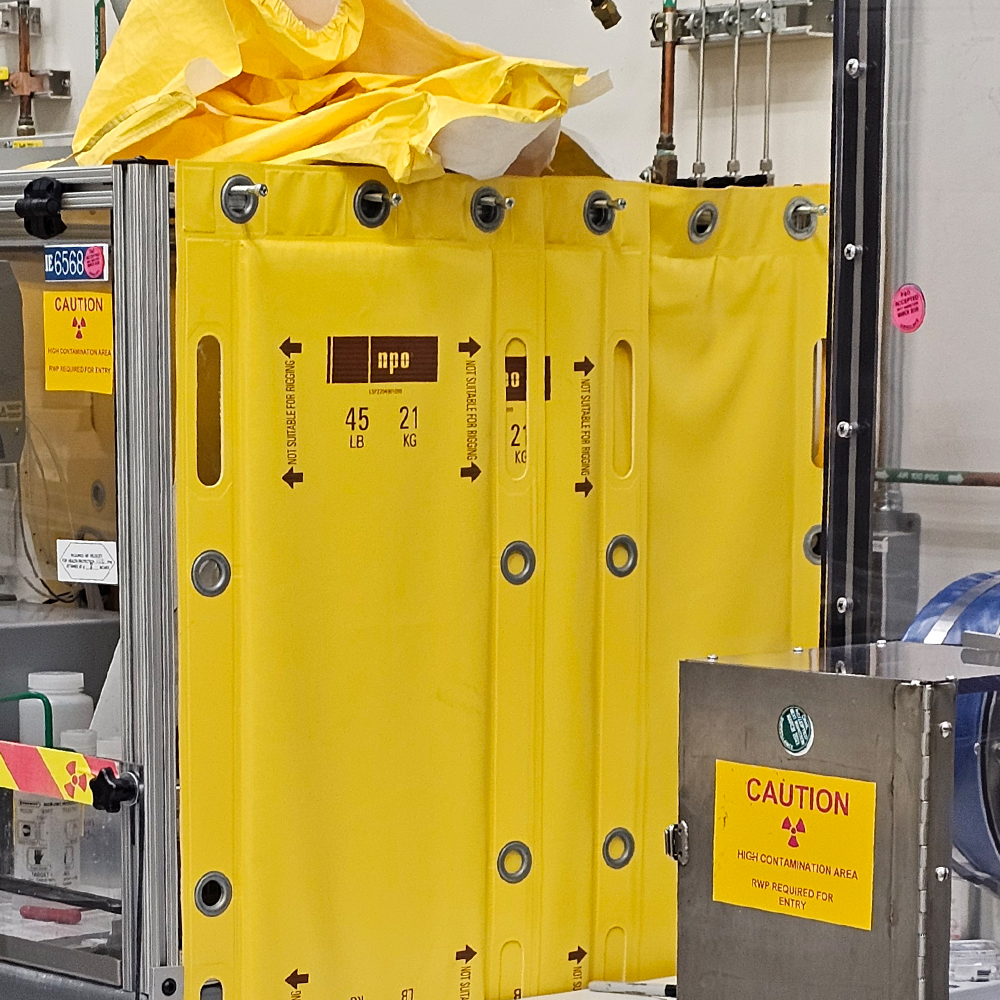
4-axis NS CNC Machines for milling hard metals in radiation environments
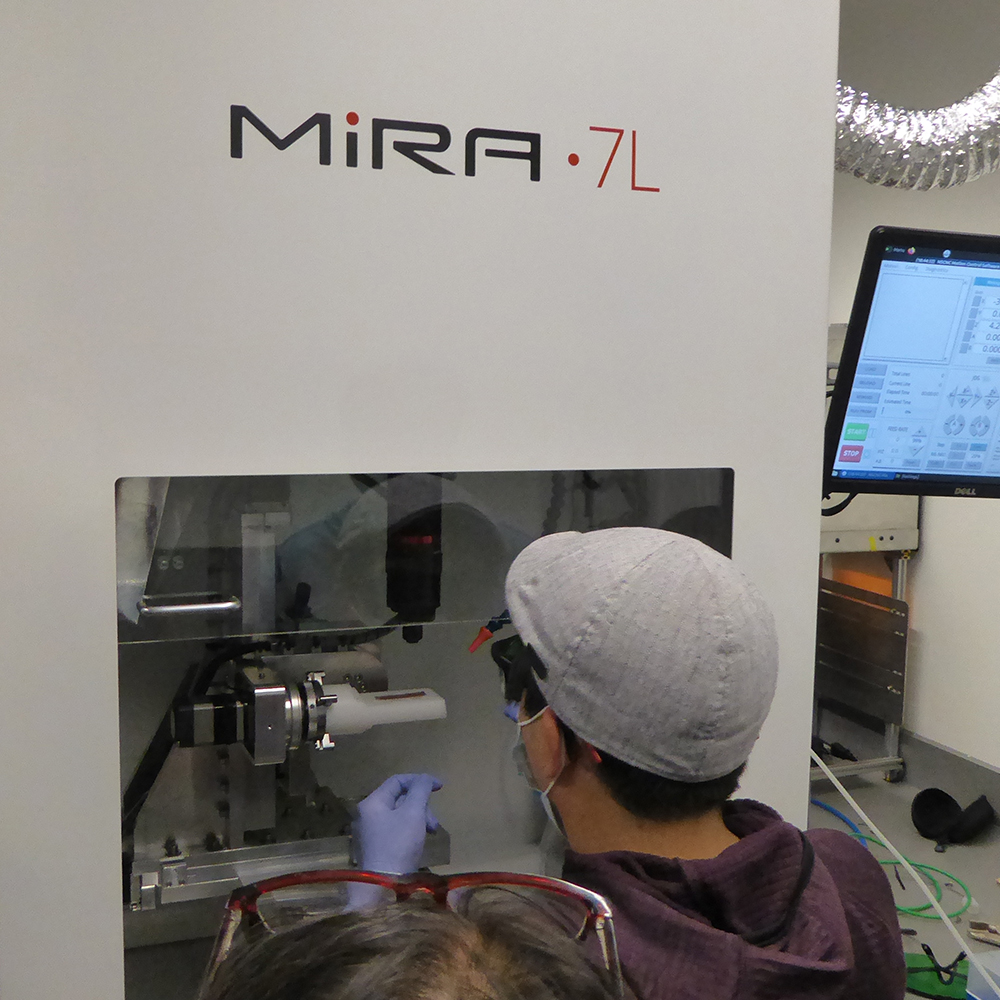
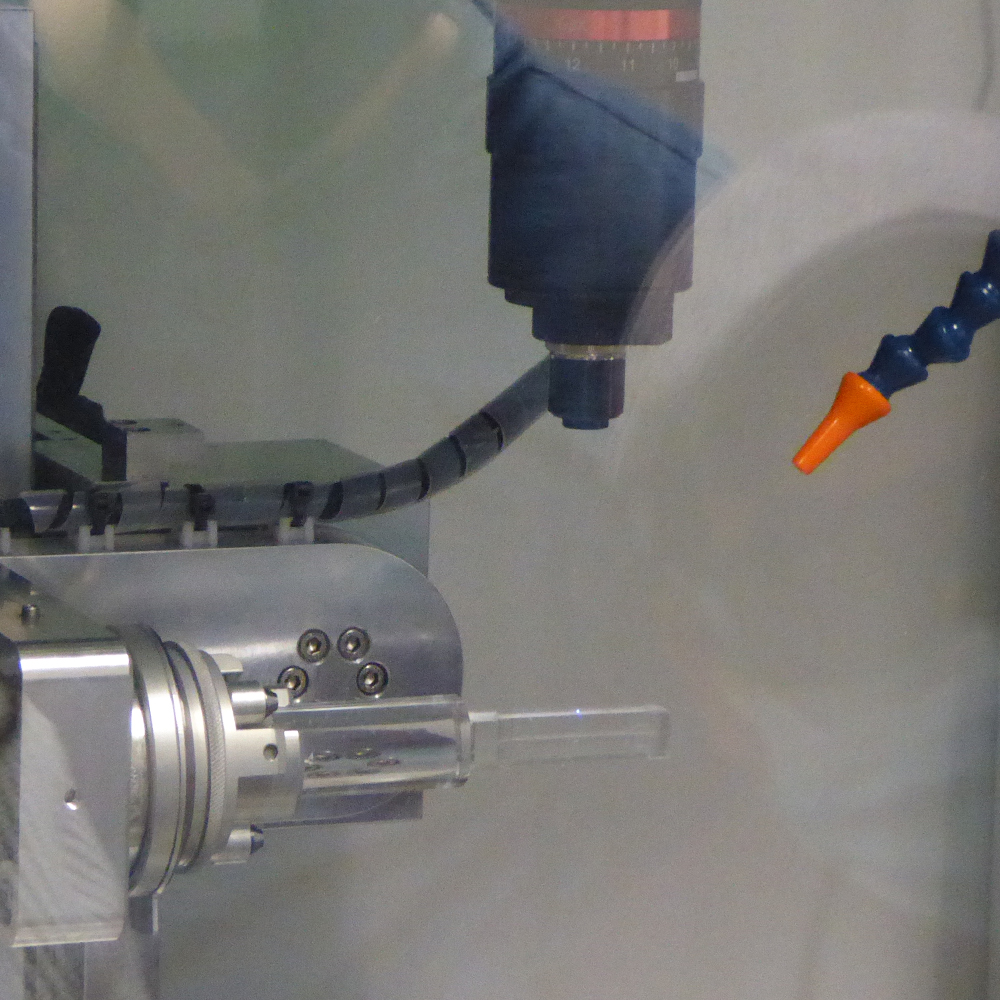
5-axis NS CNC machine with a high-precision laser instead of a spindle
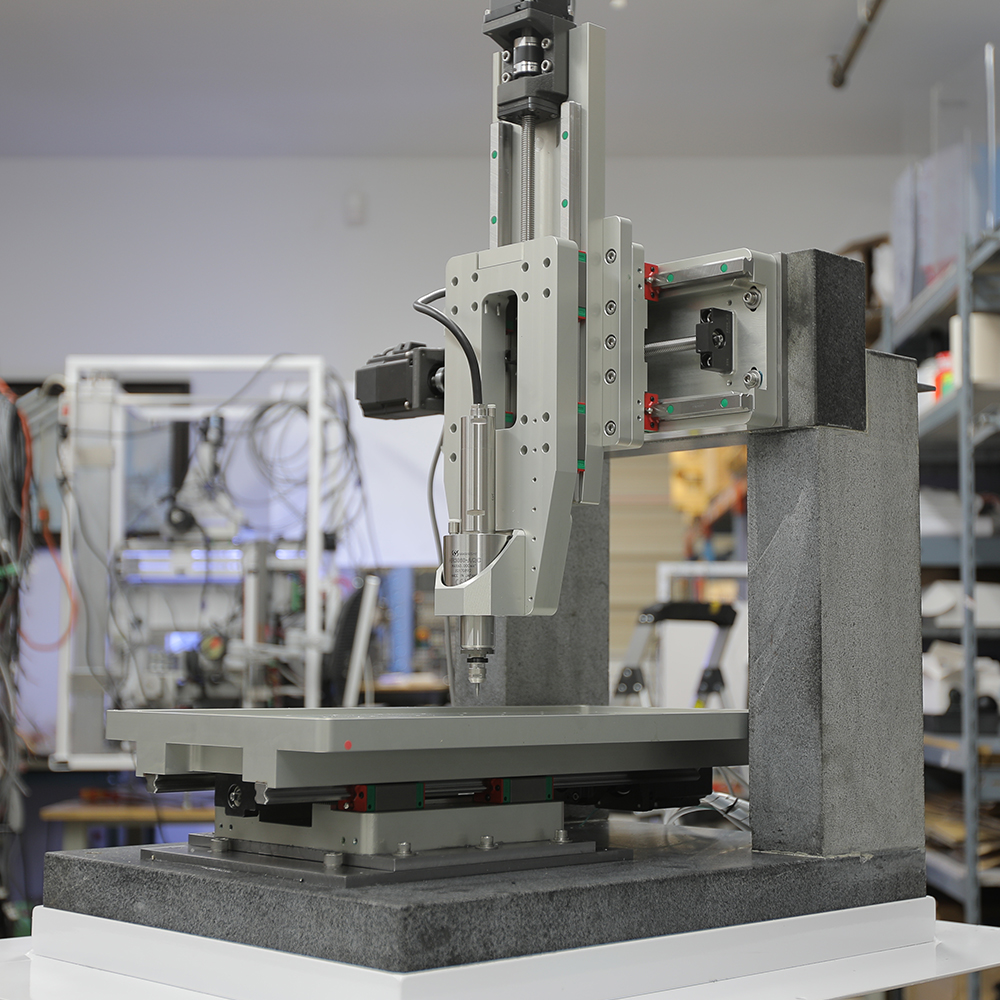
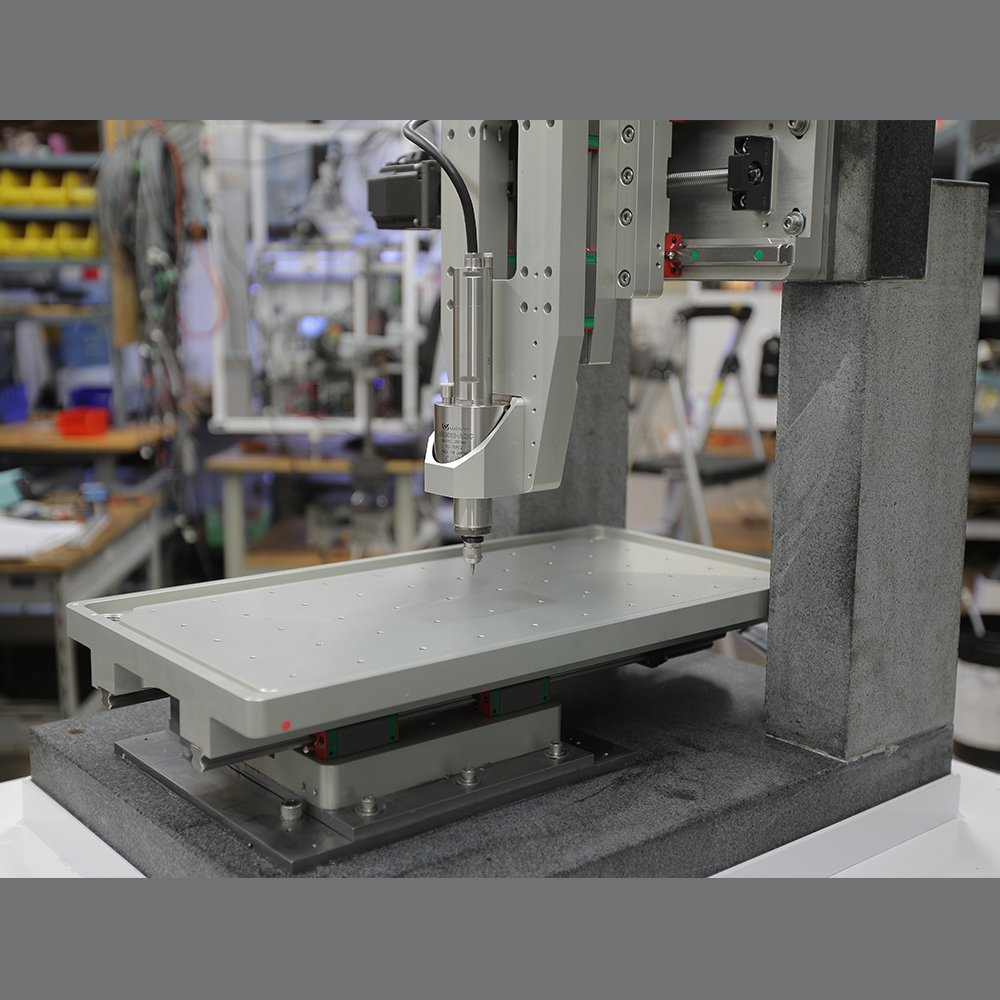
3 axis NS CNC machine on a granite base
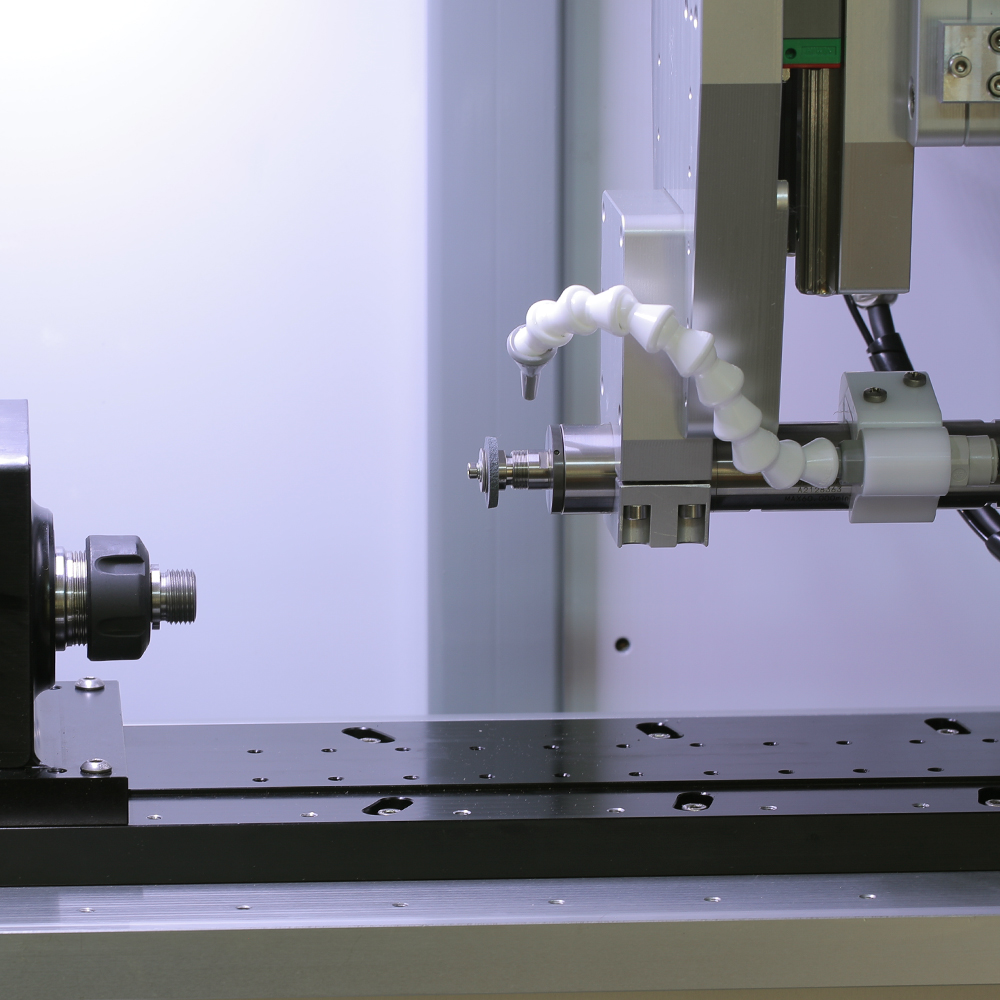
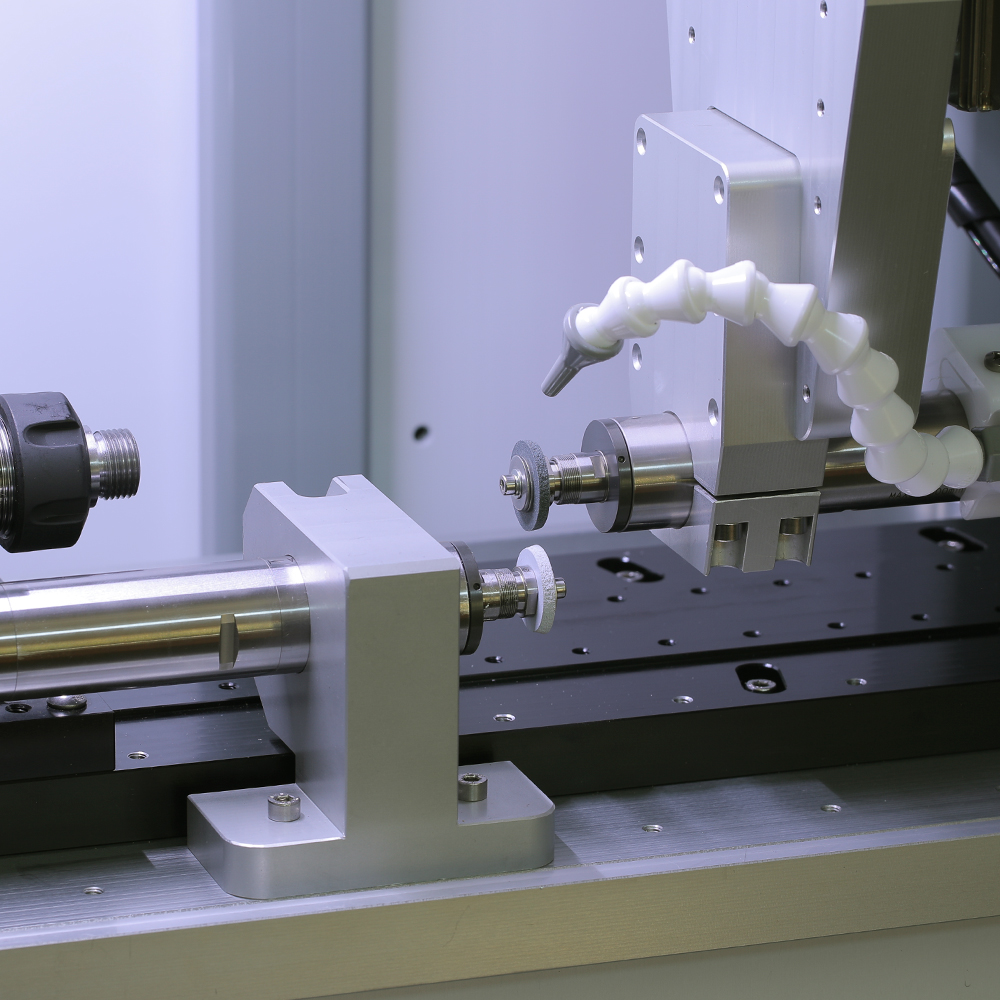
3-Axis NS CNC Machine: Grinding Instead of Conventional Milling
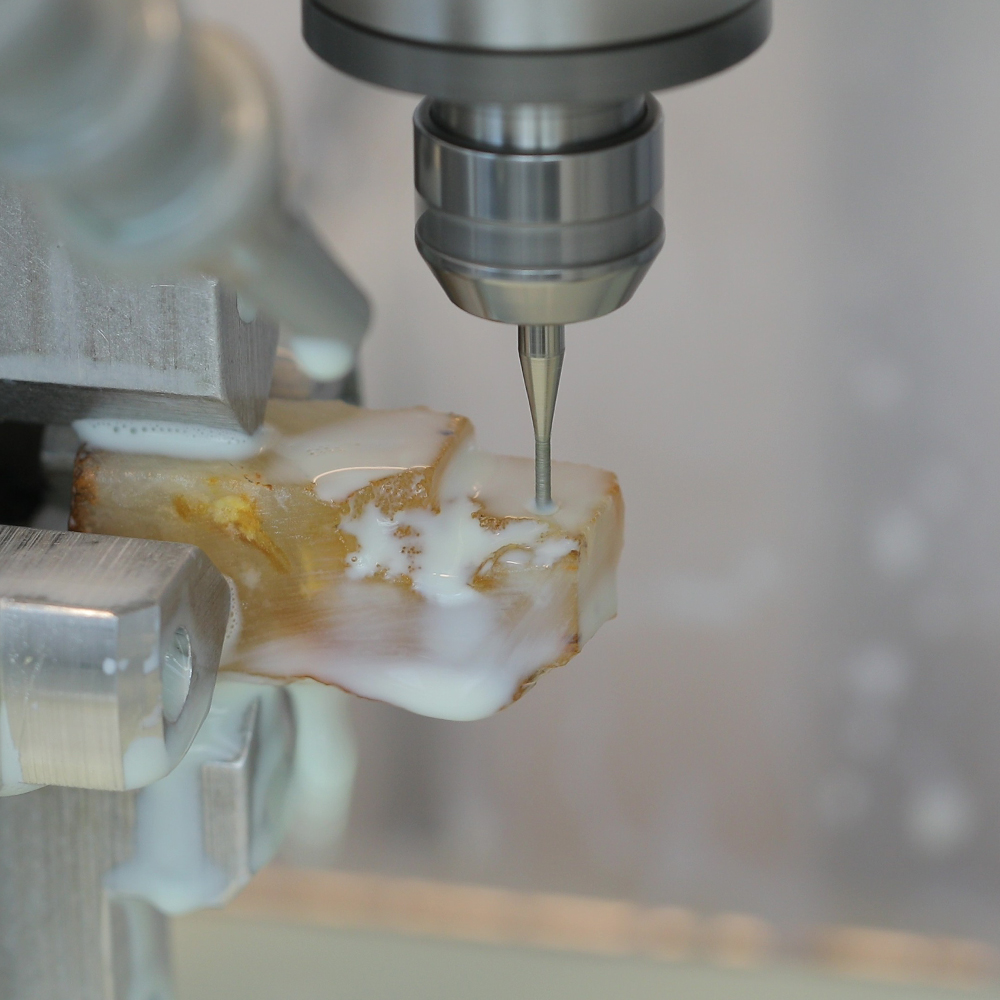
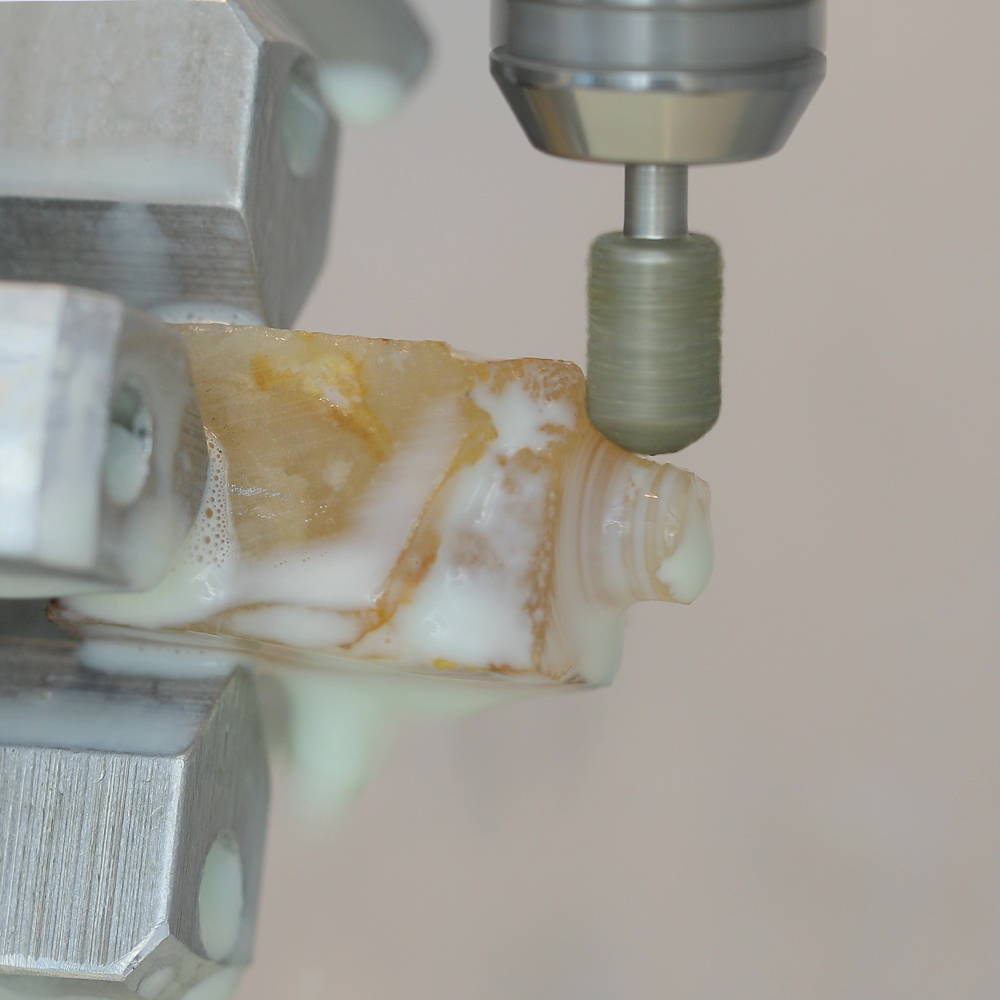
4-Axis NS CNC Machine for gemstone milling with Diamond-Coated Cutting Tools
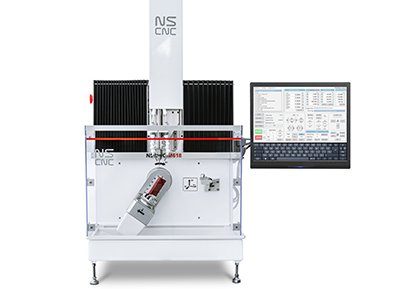
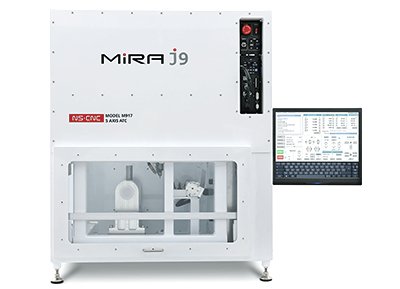
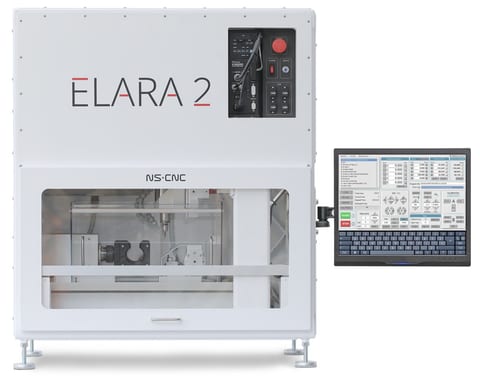
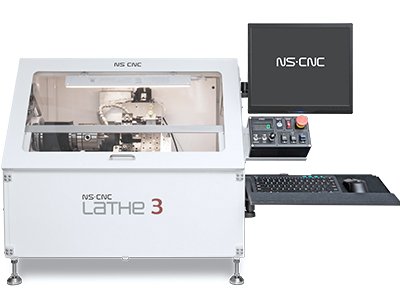
Possibly, and we will tell you if it is. The standard lineup - Mira J9, Mira 6S, Elara 2, Lathe 3 - covers a wide range of precision work. We review the application first; a custom scope is opened only when the standard machines genuinely cannot meet the requirement.
All standard NS CNC machines are equipped with NS Motion control software. We typically install the same control system on custom machines as well.
However, if requested by the client, we can equip a custom machine with a FANUC control system. FANUC is a more sophisticated and higher-cost control solution. For customers who already operate a fleet of FANUC-equipped machines, choosing FANUC for a new custom machine can provide greater consistency and simplify operation, programming, and maintenance.
The workpiece material and geometry (a drawing or model if available), the tolerance and surface finish targets, the production environment, and any constraints on operator access or footprint. The more specific the application details, the faster we can determine whether a standard or custom machine is appropriate.
Yes. Because custom builds start from standard NS CNC platforms, service and parts follow the same procedures. Modified subsystems are documented at delivery, and NS CNC supports both the standard platform components and the custom modifications.
It depends on the modification and the machine. Some changes are straightforward additions to an existing platform; others require engineering assessment. Contact us with the specific change you need - we will confirm whether it is feasible and what is involved before any work is scoped.
Both are scoped per project and confirmed at quote, after the application review and feasibility assessment. There is no catalogue price for custom work - lead time depends on the scope of modification and the current build schedule.
A custom build begins with the part, not the machine. NS CNC reviews the application first and recommends a standard machine whenever one fits - a custom scope is opened only when it doesn't.
We start with the workpiece: material, geometry, tolerances, surface finish requirements, and the environment the machine will operate in. Cleanroom certification, hazardous-area classification, and operator access constraints are captured here, not added later.
We determine whether a standard machine covers the application. If it does, we say so. If it doesn’t, we identify which NS CNC platform is the right base and define what needs to change. Scope and cost are confirmed at quote before any engineering work begins.
Design, fabrication, and assembly happen at the Surrey, BC facility. Modified subsystems - spindle, axes, base, enclosure, workholding, control interface - are engineered against the requirements established in step one.
Before shipment, the machine is run and its results are confirmed against the requirements agreed at quote. If something is out of spec, it is corrected before the machine leaves.
Custom builds are supported on the same terms as standard machines: NS-Motion software updates, service, and parts. Because the build starts from a standard platform, field support follows the same procedures.
Machining demonstrations across NS CNC machines - including the custom builds running above.
Send the part, material, and environment. We’ll tell you whether a standard machine covers it or what a custom build involves.
Two 5-axis mills, a 3 & 4-axis mill, and a 3-axis CNC lathe - the complete current catalog.