Company
Solid carbide. 26 mm cutting depth in a single pass. 0.1 mm spherical tip. Runout under 1 micron. Built exclusively for 5-axis wax milling on NS CNC machines.
Early 5-axis wax milling used cutters built for 3-axis work - 10–12 mm cutting lengths, geometries suited to flat reliefs. As jewelry models became more complex and 5-axis strategies demanded rotation through large angles, the limitations of those tools became visible in the output.
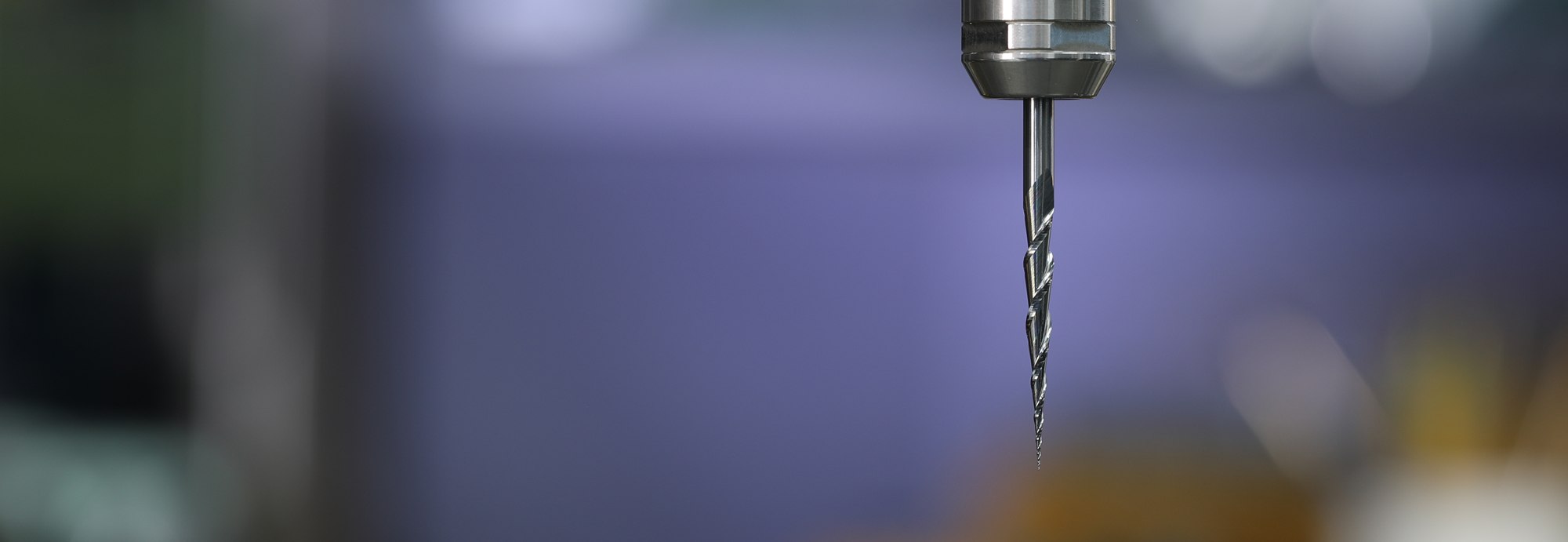
NS CNC set the target: a tapered ball-end cutter with 26 mm cutting length, 0.1 mm tip, sub-micron runout - manufacturable at production scale. Multiple flute geometry iterations over several years to arrive at the current design.
Every dimension follows from the demands of 5-axis wax milling - long reach, rotational clearance, fine tip, and runout tight enough that the error never reaches the casting.
Cutting length determines whether the tool reaches full model depth in one pass. Taper determines whether it flexes or holds geometry at depth. Tip radius determines the finest detail the tool can carry. Runout at the tip determines whether that detail survives into the casting.
The Mira Bit was built by optimizing all four together, over multiple flute geometry iterations, for the conditions of Mira-series 5-axis spindles.
A short-flute 3-axis cutter reaches simple models fine; on deeper ring profiles and undercut galleries it runs out of flute and forces a second pass.
Cutters built for 3-axis milling carry 10–12 mm of usable flute - sufficient for flat reliefs, insufficient for the full depth of a complex ring shank or undercut gallery. Full depth meant a roughing pass, then a finish pass: double the cycle time, plus registration risk between passes. At high tilt angles, short-flute geometry also put the shank against the workpiece, limiting the rotational range the machine could use.
At 26 mm, the Mira Bit covers full model depth in a single pass while the rotary axes move freely through their range. The tapered profile keeps the shank clear of the workpiece across large tilt angles, so the 5-axis strategies the Mira was designed to run are not constrained by the tool. There is no roughing stage - the bit enters at full feed rate, traces the geometry once, and finishes.
Standard for everyday production milling; X for jobs demanding finer surface detail or deeper undercut access.
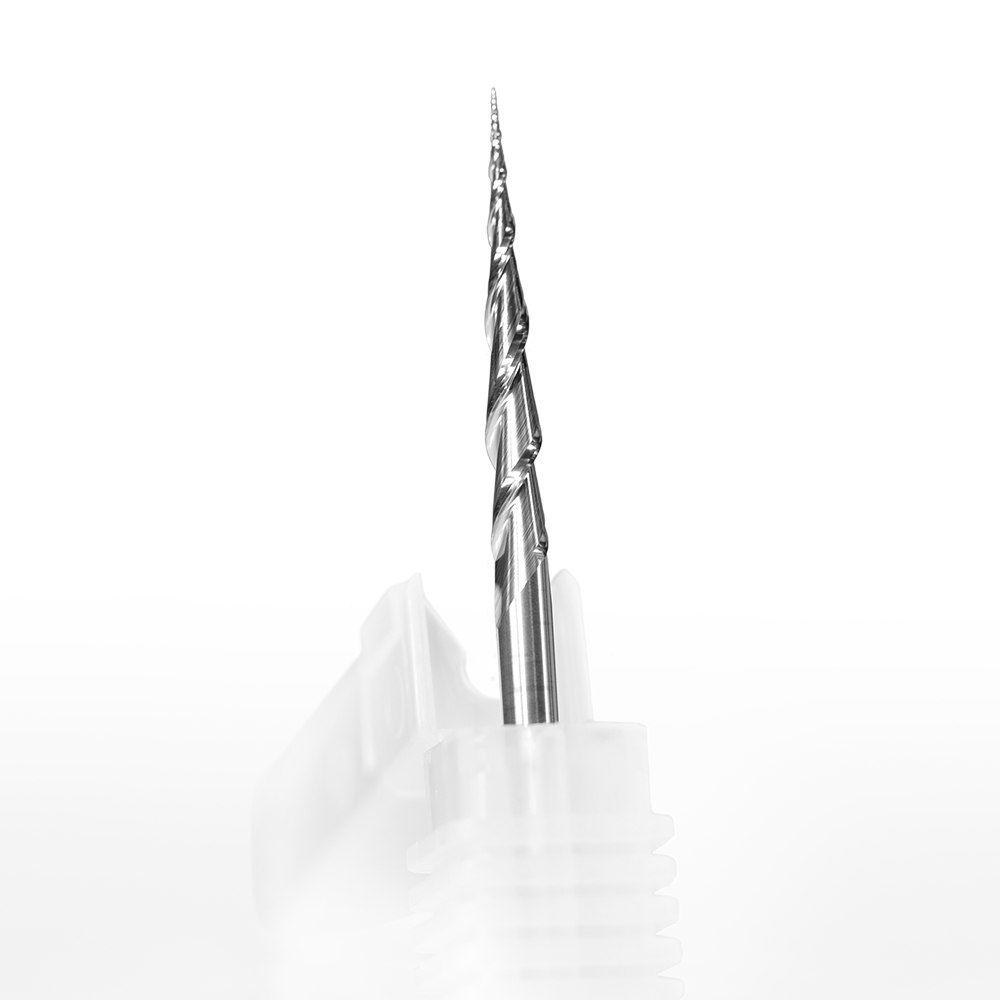
Everyday production milling. Standard collet compatible across all Mira-series machines. 0.10 mm tip diameter, 26 mm cutting length, 52 mm overall, 3.175 mm (1/8″) shank. Solid carbide. 2 flutes. 10° full taper, 5° sided. Runout under 1 micron. Manufactured in the United States.
Finer tip, longer stick-out. Requires AA Series High Precision collet. 0.07 mm tip, 26 mm cutting length, 65 mm overall. 52 mm max stick-out. Same carbide, same flute geometry, same runout specification - optimized for jobs demanding finer surface detail or deeper undercut access.

In daily ring and pendant work the figure runs to roughly a year on one bit - usage-dependent, but the result of tight runout, flute geometry iterated for jewelry wax, and a carbide grade suited to the material. Lighter, occasional use stretches it further.
Stone settings, tight prong tips, gallery undercuts, and filigree push surface requirements further - that is the X: a 0.07 mm tip for finer feature resolution, and 52 mm of stick-out for geometries the Standard's profile cannot reach.
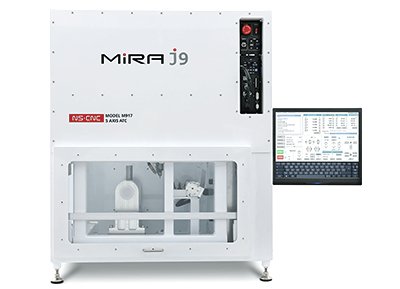
The specification is a system, not just a cutter. Mira-series spindles run to 50,000 RPM at ≤ 1 μm runout, and the bits are held to the same sub-micron standard - on a spindle with higher runout, the surface quality the tool is capable of does not survive to the part.
The Standard uses a 3.175 mm (1/8″) shank and is collet-compatible across all Mira-series machines - no adapter required. The X uses the same shank but requires the AA Series High Precision collet. If you are unsure whether your machine has the right collet for the X, contact us before ordering.
For the Standard, no - any standard Mira-series collet accepts it. For the X, yes: the AA Series High Precision collet is required. The X’s finer tip makes runout at the collet interface more consequential, and the AA Series collet keeps the system within the sub-micron tolerance the bit is built to.
The Mira Bit is built for jewelry milling wax as used in lost-wax casting workflows. For questions about a specific wax formulation or hardness, confirm with NS CNC before running production.
In daily production jewelry work it often runs about a year on a single bit - a function of correct geometry, carbide grade, and the matched spindle runout of Mira-series machines. Actual service life varies with feed rate, model complexity, and wax type.
Start with the Standard unless you have a specific reason to need the X. It covers the full range of everyday jewelry production with the same 26 mm cutting length and sub-micron runout. Move to the X when surface detail exceeds what a 0.10 mm tip can resolve, or when undercut geometry needs the additional stick-out - and budget for the AA Series collet if you don’t have one.
No. The Mira Bit is built exclusively for wax milling. It is not rated for metal, resin, or any material other than jewelry milling wax.
Standard and X are sold direct through the shop.
Standard covers everyday production milling; X requires the AA Series High Precision collet. Send your application and we’ll confirm which tool fits.
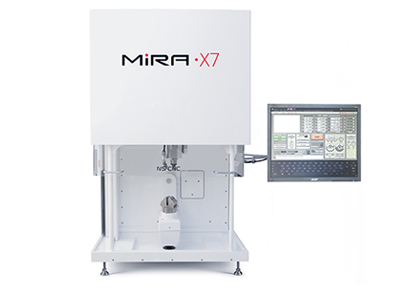
The Mira Bit is built exclusively for 5-axis wax milling on NS CNC machines, with a standard collet compatible across all Mira-series machines.